Blog

  • Chakras and Sound: A Frequency for Every Energy Center.

    Chakras and Sound: A Frequency for Every Energy Center.

    This entry is part 12 of 14 in the series Sound Frequencies

    I have three beautifully verified studies for this post. The OM chanting and heart rate variability study comparing experienced and inexperienced yoga practitioners (PMID: 35444369), the humming Bhramari pranayama as stress buster HRV study (PMC10182780), and our approved series anchor studies. Writing Post 12 now with strict positive NLP language, no horizontal or vertical lines, an engaging SEO-friendly excerpt, a 3 to 5 sentence intro summary, and all internal references using full post titles.

    Chakras and Sound: A Frequency for Every Energy Center

    Series: Sound Frequencies for Mind, Body, Spirit, and Soul

    Excerpt: Your body has seven primary energy centers, each associated with a specific region, element, color, and quality of experience, and each one has its own frequency. Sound healing has long used specific tones to support and awaken these centers, and the research on what intentional vocal sound and specific frequencies actually do inside the nervous system is genuinely extraordinary. This is your complete, practical, and deeply supportive guide to the chakras and the frequencies that serve them.

    Intro Summary

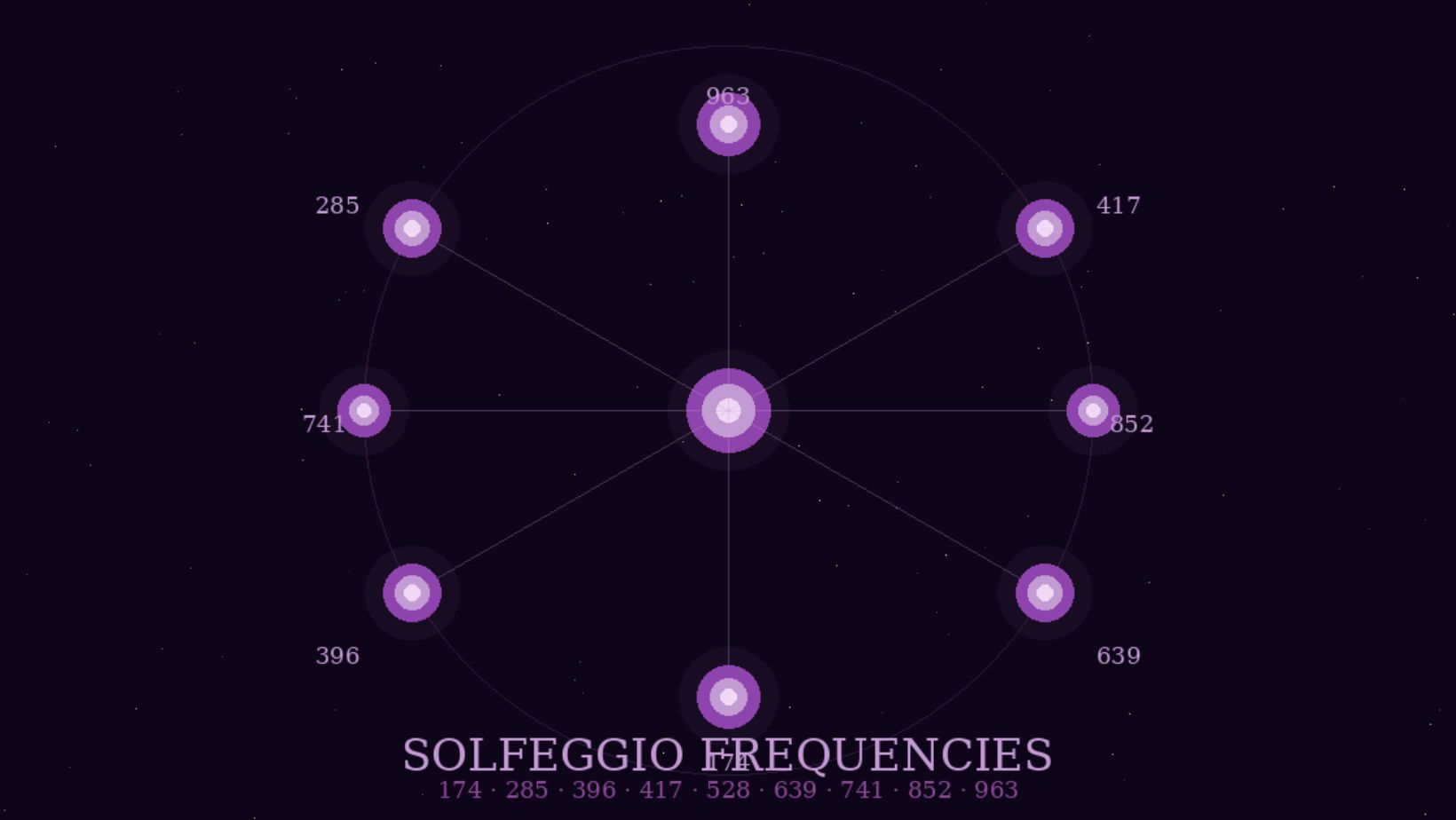
    The seven chakra system is one of the most enduring and widely recognized frameworks for understanding the relationship between energy, the body, and consciousness, and it has its roots in the ancient Indian traditions of yoga, Ayurveda, and Vedic philosophy that stretch back thousands of years. In sound healing practice, each of the seven primary chakras is associated with a specific Solfeggio frequency, a specific element, a specific region of the physical body, and a specific quality of lived experience, creating a beautifully integrated map for using sound intentionally to support different aspects of wellbeing. What makes this framework particularly compelling in the context of this series is the growing body of research showing that specific vocal tones, particularly chanting and humming, produce measurable effects on the autonomic nervous system through pathways that align with the very energy centers this tradition has always associated with these sounds. As we explored in The Solfeggio Frequencies: Origins, History, and How to Use Them, each Solfeggio tone carries its own traditional invitation, and this post gives you the most integrated and embodied map of those tones yet.

    The Chakra System: Ancient Wisdom, Modern Resonance

    The word chakra comes from the Sanskrit for wheel or circle, reflecting the understanding in yogic tradition that these energy centers are not static but dynamic, spinning vortices of life energy that receive, process, and distribute vital force through the body and its subtle fields. The classical seven-chakra system describes a vertical pathway of energy centers running from the base of the spine to the crown of the head, each governing specific aspects of physical, emotional, mental, and spiritual experience.

    Within the yoga and Ayurveda traditions, maintaining the vitality and openness of each chakra was understood as central to health in its fullest sense, not merely the absence of physical symptoms but the vibrant, integrated aliveness of a being who is fully present in body, heart, and spirit. When a chakra is vital and open, the qualities it governs flow naturally and abundantly. When it is contracted or overstimulated, those same qualities become sources of challenge, restriction, or imbalance.

    Sound has always been one of the primary tools for chakra work in these traditions. Specific Sanskrit seed syllables called bija mantras, each associated with a particular chakra, have been chanted for millennia as a way of activating, cleansing, and balancing each energy center. The toning of specific vowel sounds, the singing of specific musical intervals, and the use of specific instruments whose tonal qualities correspond to different chakras are all ancient practices that modern sound healing has both honored and expanded.

    What the Research Is Revealing About Sound and the Body’s Energy Centers

    The research literature on the specific effects of chakra-associated sound practices on the autonomic nervous system is growing in genuinely fascinating directions. Two studies in particular speak beautifully to the bridge between ancient chakra sound practice and modern physiological measurement.

    A study published in the International Journal of Yoga examined the immediate effects of OM chanting on heart rate variability in both experienced yoga practitioners and individuals with no prior yoga experience. Results showed that just five minutes of OM chanting produced measurable increases in high-frequency heart rate variability, a marker of parasympathetic nervous system activity, in yoga practitioners, with the increase positively correlated with years of yoga experience. Even the yoga-naive participants showed movement toward parasympathetic dominance, though less pronounced, suggesting that the benefits of toning the primordial sound associated with the crown chakra are available even to those who are completely new to the practice. (1)

    A Holter-based study examining humming, the simple version of Bhramari pranayama, the yoga practice associated with the throat and third eye chakras and involving sustained humming on exhalation, found that humming generated the lowest stress index of all activities measured, including physical exercise, emotional stress, and sleep, across multiple heart rate variability parameters. The researchers concluded that humming can serve as an effective autonomic stress buster based on its measurable impact on heart rate variability during practice. (2) Together these studies illuminate something that the chakra tradition has always understood intuitively: that specific vocal frequencies and resonant sounds directed toward specific regions of the body produce specific and meaningful physiological responses in the very systems that govern our capacity for ease, vitality, and inner balance.

    The Seven Chakras and Their Frequencies: A Complete Guide

    The following is your complete, integrated reference for each of the seven primary chakras, the Solfeggio frequency associated with it, the region of the physical body it governs, its traditional element and color, and the quality of experience it is believed to support when vibrant and open.

    Root Chakra: Muladhara, 396 Hz

    Located at the base of the spine, the root chakra governs our relationship to physical safety, material grounding, and the fundamental sense of belonging in the body and on the Earth. Its element is earth and its color is a deep, rich red. When this center is vibrant, we feel rooted, stable, and genuinely at home in our physical existence. The Solfeggio frequency associated with the root chakra is 396 Hz, traditionally described as a liberating tone that supports the release of fear and guilt and the restoration of a felt sense of groundedness and security. Working with this frequency through listening, toning, or gentle movement that connects you with the Earth beneath your feet invites the body to remember its own deep rootedness. Suggested BPM for music pairing: 80 to 109.

    Sacral Chakra: Svadhisthana, 417 Hz

    Located in the lower abdomen, the sacral chakra governs creativity, emotional fluidity, sensory pleasure, and the dynamic flow of life energy through relationships and creative expression. Its element is water and its color is a warm, luminous orange. When this center is vibrant, life feels flowing, creative, and pleasurably embodied. The associated frequency is 417 Hz, a tone believed to support positive change, the release of stagnant emotional patterns, and the restoration of creative flow. Toning this frequency while placing one hand gently over the lower abdomen invites the body to soften and open in this center. Suggested BPM for music pairing: 80 to 100.

    Solar Plexus Chakra: Manipura, 528 Hz

    Located in the upper abdomen, the solar plexus chakra governs personal power, self-confidence, and the warm, radiant quality of inner authority and directed will. Its element is fire and its color is a bright, vibrant yellow. When this center is vibrant, we move through life with clarity, confidence, and the felt sense of our own capability. As we explored in depth in Deep Dive into the Love Frequency: 528 Hz, this is the most widely researched of the Solfeggio tones, with studies showing its capacity to support reductions in cortisol and increases in oxytocin following even brief exposure. It is one of the most powerful points of convergence between the chakra tradition and the emerging science of healing frequency. Suggested BPM for music pairing: 60 to 80.

    Heart Chakra: Anahata, 639 Hz

    Located at the center of the chest, the heart chakra is the bridge between the lower three and upper three chakras, the meeting place of earth and heaven, body and spirit, self and other. Its element is air and its color is a clear, open green. When this center is vibrant, love flows freely, forgiveness comes naturally, and we experience ourselves as genuinely connected to all of life. The associated frequency is 639 Hz, associated with communication, relational harmony, and the cultivation of compassion for self and others, also one of the core Tesla 3-6-9 frequencies explored in The Nikola Tesla 3-6-9 Frequencies: Math, Mystery, and Sound. Placing one hand gently over the heart center while listening to or toning 639 Hz invites this center to soften and open with each breath. Suggested BPM for music pairing: 70 to 90.

    Throat Chakra: Vishuddha, 741 Hz

    Located at the throat, the throat chakra governs authentic self-expression, clear communication, and the quality of speaking one’s deepest truth with clarity and courage. Its element is ether and its color is a clear, expansive blue. When this center is vibrant, words come easily and honestly, creative expression flows without self-censorship, and we feel genuinely heard in our most important relationships. The associated frequency is 741 Hz, traditionally believed to support mental clarity, problem-solving, and the awakening of expressive courage. Toning a sustained vowel sound on the exhale, particularly a long open sound like the syllable ham which is the bija mantra of the throat chakra, while listening to 741 Hz can be a deeply activating and clarifying practice. Suggested BPM for music pairing: 90 to 110.

    Third Eye Chakra: Ajna, 852 Hz

    Located at the center of the forehead, the third eye chakra governs intuition, inner vision, and the quality of clear, penetrating awareness that sees beyond surface appearances. Its element is light and its color is a deep, luminous indigo. When this center is vibrant, intuition is trustworthy, clarity comes without effort, and the inner knowing that guides wise decision-making flows naturally and reliably. The associated frequency is 852 Hz, a tone associated with the deepening of meditative awareness and the cultivation of spiritual insight. The humming research referenced above is particularly resonant here: the practice of Bhramari pranayama, which creates a sustained hum that vibrates through the sinus cavities near the third eye region, produced the lowest stress index of all activities measured in research participants, supporting both the physiological and the energetic traditions surrounding this practice. Suggested BPM for music pairing: 60 to 80.

    Crown Chakra: Sahasrara, 963 Hz

    Located at the crown of the head, the crown chakra governs our connection to universal consciousness, spiritual awareness, and the felt sense of belonging to something beautifully larger than the individual self. Its element is cosmic consciousness and its color is a radiant violet or pure white light. When this center is vibrant, spiritual experience feels natural and accessible, the boundary between the personal self and the universal seems permeable and luminous, and a quality of deep inner peace pervades all of life. The associated frequency is 963 Hz, the highest of the Solfeggio tones and the one most directly associated with states of expanded spiritual awareness. The OM chanting research explored above speaks directly to this chakra: OM is the primordial sound of the crown center, and its effects on the parasympathetic nervous system affirm that the ancient wisdom surrounding this practice has a genuinely biological dimension worth honoring. Suggested BPM for music pairing: 50 to 70.

    A Complete Chakra Sound Practice

    Here is a simple, accessible, and deeply nourishing way to bring the full chakra frequency map into your personal practice.

    Find a comfortable position sitting upright with your spine gently lengthened. Take three deep breaths to arrive fully in your body. Then, beginning at the root and moving upward through each center, spend two to three minutes with the Solfeggio frequency associated with each chakra. You can do this by listening to a dedicated playlist, by toning the associated frequency, or by placing one hand gently on the body region associated with each chakra while breathing slowly and intentionally.

    Notice which centers feel immediately alive and responsive, and which ones seem quieter or more contracted. There is no right or wrong here. The body’s honest response is always the most useful information. Journal what you notice after each session, including any shifts in mood, physical sensation, or inner clarity. Over time this practice becomes one of the most personal and precise sound healing tools available to you.

    We warmly invite you to share your experience with this practice in the comments below or through a direct message. And stay with us as we bring all of the wisdom in this series into practical, joyful daily application in How to Build Your Own Sound Healing Practice at Home, coming next in this series.

    References

    1. Inbaraj G, Rao RM, Ram A, et al. Immediate effects of OM chanting on heart rate variability measures compared between experienced and inexperienced yoga practitioners. Int J Yoga. 2022;15(1):52-58. PMID: 35444369.
    2. Trivedi G, Sharma K, Saboo B, et al. Humming (simple Bhramari pranayama) as a stress buster: a Holter-based study to analyze heart rate variability parameters during Bhramari, physical activity, emotional stress, and sleep. Cureus. 2023;15(4):e37527. PMC10182780.
  • Planetary Frequencies: Tuning Into the Music of the Spheres.

    Planetary Frequencies: Tuning Into the Music of the Spheres.

    This entry is part 11 of 14 in the series Sound Frequencies

    Long before telescopes, before calculators, and long before the word frequency entered the scientific vocabulary, the ancient Greeks understood something extraordinary about the relationship between mathematics, music, and the movement of the heavens. They called it the music of the spheres, the idea that the planets in their orbits produce a kind of cosmic harmony, inaudible to ordinary human perception but present in the mathematical ratios that govern the movements of the cosmos. Modern researchers and practitioners of sound healing have taken this ancient intuition and given it a contemporary form, calculating the orbital frequencies of each planet and translating them into audible tones through a process called octave equivalence. As we explored in The Schumann Resonance: Living in Tune with the Earth, the Earth itself vibrates at a frequency that sits at the threshold of human brainwave states, and the planetary frequency tradition invites us to consider that every body in our solar system carries its own tonal signature, one that the attentive human body and nervous system may be able to receive and respond to.

    From Pythagoras to Kepler: A History Worth Knowing

    The music of the spheres is one of the oldest and most enduring ideas in the history of human thought. Its origins are most closely associated with Pythagoras, the Greek philosopher and mathematician who lived around 500 BCE and who discovered that musical harmony is governed by precise mathematical ratios. The interval of a perfect fifth, so satisfying to the human ear, corresponds to the ratio of 3 to 2. The octave corresponds to 2 to 1. These relationships are not arbitrary. They are expressions of mathematical order, and Pythagoras believed that the same order was written into the structure of the cosmos itself.

    He and his followers proposed that the planets, as they moved through the heavens, traced mathematical patterns that corresponded to musical intervals, that the distances between the spheres were arranged in the same harmonic proportions that govern the relationships between musical notes. The cosmos, in this view, was a vast and intricate instrument, perpetually playing a symphony of divine mathematical precision.

    This vision was carried forward through the centuries, through Plato, through the Islamic astronomers of the medieval period, and into the Renaissance. It reached one of its most brilliant modern expressions in the work of Johannes Kepler, the seventeenth century mathematician and astronomer who formulated the laws of planetary motion and who explicitly understood his scientific work as the uncovering of the music of the spheres. Kepler calculated the angular velocities of each planet at various points in its orbit and mapped them to musical intervals, demonstrating that the mathematical ratios of planetary motion corresponded with remarkable precision to the intervals of the musical scale.

    What Kepler could not have anticipated was that four centuries later, a researcher named Hans Cousto would take his calculations a step further, using a mathematical process called octave equivalence to translate the orbital frequencies of each planet into specific audible tones that human beings could actually hear and work with. Octave equivalence is the principle, well established in music theory, that a frequency and its doublings and halvings are experienced as the same note in different registers. By repeatedly doubling the orbital frequency of each planet until it entered the audible range, Cousto arrived at the set of planetary tones that sound healing practitioners work with today.

    The Planetary Tones: A Living Reference

    Each planetary frequency offered here is accompanied by its traditional wellness associations in sound healing practice, drawn from the confluence of astronomical mathematics, musical philosophy, and the experiential wisdom of practitioners who have worked with these tones for decades. These associations are held as traditional practice and invited exploration, not medical claims.

    Earth: 126.22 Hz

    The Earth frequency sits in a warm, grounded register that many practitioners describe as immediately stabilizing. Associated with presence, embodiment, and the deep intelligence of the living body, this tone invites a felt sense of being fully here, rooted in the physical world and at home within it. It is a beautiful frequency to begin any sound healing practice with, as an invitation to arrive fully in the body before the deeper journey begins. Suggested BPM for music pairing: 60 to 80.

    Moon: 210.42 Hz

    The Moon frequency is associated with emotional attunement, cyclical wisdom, the rhythms of the inner life, and the quality of receptive, reflective awareness. Many practitioners work with this tone during practices oriented toward emotional processing, intuitive development, or any time the inner emotional landscape calls for gentle acknowledgment and movement. Suggested BPM for music pairing: 60 to 90.

    Mercury: 141.27 Hz

    Associated with the qualities of communication, mental clarity, and the swift movement of thought and information, Mercury’s frequency is often used during creative work, writing, speaking, or any practice oriented toward clearer self-expression. Suggested BPM for music pairing: 70 to 90.

    Venus: 221.23 Hz

    The frequency of Venus is associated with love, beauty, sensory pleasure, and the quality of relational harmony. It is one of the most warmly received tones in planetary sound healing practice, often described as having a softening, heart-opening quality that invites the practitioner into greater appreciation of beauty in all its forms. Suggested BPM for music pairing: 60 to 80.

    Mars: 144.72 Hz

    Mars carries the frequency of directed will, courage, vital energy, and purposeful action. Practitioners work with this tone when they need access to their own inner fire, when a creative project requires sustained energy, or when the quality of committed forward movement needs support. Suggested BPM for music pairing: 80 to 100.

    Jupiter: 183.58 Hz

    The frequency of Jupiter is associated with expansion, generosity, abundance, and the quality of open-hearted optimism that sees possibility rather than limitation. Many practitioners describe this tone as having a lifting, spacious quality, as though it gently widens the inner horizon. Suggested BPM for music pairing: 60 to 90.

    Saturn: 147.85 Hz

    Saturn’s frequency carries the quality of structure, depth, patience, and the slow wisdom that comes from sustained engagement with what matters most. It is associated with the capacity to commit, to persist, and to honor the deep time rhythms of a life lived with intention. Suggested BPM for music pairing: 70 to 90.

    Uranus: 207.36 Hz

    The frequency of Uranus is associated with innovation, liberation, and the sudden awakening that comes when an old pattern is released and a new possibility becomes visible. Practitioners work with this tone during periods of creative disruption, personal reinvention, or any time the invitation to change is louder than the comfort of staying the same. Suggested BPM for music pairing: 80 to 100.

    Neptune: 211.44 Hz

    Neptune carries the frequency of deep intuition, dreaming, spiritual depth, and the quality of dissolving awareness that makes mystical states and creative flow possible. It is often described as one of the most deeply meditative of the planetary tones, particularly suited to practices of inner listening and the cultivation of non-ordinary awareness. Suggested BPM for music pairing: 60 to 80.

    Pluto: 140.25 Hz

    Pluto’s frequency is associated with profound transformation, the courage to release what no longer serves, and the regenerative intelligence that knows how to begin again from the ground up. Many practitioners describe working with this tone as feeling like a deep and thorough clearing, one that makes space for something genuinely new. Suggested BPM for music pairing: 60 to 80.

    What the Research Tells Us About Cosmic Sound and Human Wellbeing

    While peer-reviewed research on the specific planetary frequencies is not yet available, the scientific literature on the effects of natural and acoustically rich sound environments on human physiology and wellbeing continues to grow in ways that offer a genuinely supportive context for planetary frequency practice.

    A randomized crossover study published in Psychophysiology investigated the psychophysiological effects of nature-based soundscapes on fifty-three healthy participants. Using heart rate variability as the primary outcome measure, researchers found that exposure to nature-based soundscapes significantly improved heart rate variability and supported enhanced parasympathetic nervous system activity compared to an urban reference soundscape. Participants also reported meaningful improvements in subjective wellbeing, including lower feelings of anxiety and depression alongside increased feelings of creativity, comfort, and belonging. (1) The planetary frequency tradition, which draws its tones from the mathematical frequencies of nature’s own grand movements, belongs to the same family of sonic experience that this research illuminates so beautifully.

    A separate pilot study published in Physiology and Behavior examined physiological stress recovery in participants exposed to sounds of nature compared to control conditions. Results indicated measurable parasympathetic activation in those exposed to natural soundscapes, a finding that was not replicated in the control group, demonstrating a specific and meaningful link between the sounds of the natural world and the body’s capacity to move from a state of activation into one of restoration and ease. (2) The planets, after all, are as natural as birdsong and running water. Their frequencies, brought into the audible range through the mathematics of octave equivalence, carry the same quality of belonging to a larger natural order that the body appears to recognize and respond to with gratitude.

    How to Explore Planetary Frequencies in Your Own Practice

    Planetary tuning forks are widely available through sound healing suppliers and offer a tactile and vibrational experience of each frequency that listening alone cannot fully replicate. When a planetary tuning fork is struck and held near the body or placed gently on a specific area, the vibration is felt as well as heard, engaging the musculoskeletal and neurological pathways explored in The Science of Sound as Medicine alongside the auditory pathway.

    For those who prefer listening-based exploration, planetary frequency recordings are available across many streaming platforms and sound healing resources. A beautiful entry point is to spend a week with one planetary tone at a time, beginning with Earth to establish grounding and presence, then moving through the planets in any order that calls to you. Keep a journal of your experience with each tone and notice which planetary frequencies your nervous system leans toward most naturally.

    Many practitioners find it meaningful to work with the planetary frequency associated with the day of the week, each of the seven classical planets traditionally associated with a specific day, or with the frequency of a planet that is astrologically significant in a particular season or personal cycle. These are frameworks for deepening engagement rather than rigid systems to follow, and your own resonance is always the most trustworthy guide.

    Combine planetary tones with the other frequency practices explored throughout this series. A meditation that opens with the Earth frequency, moves through the heart-opening warmth of Venus, and closes with the deep transformative clearing of Pluto creates a tonal arc that many practitioners describe as one of the most complete and nourishing sound healing experiences available.

    Stay with us as we bring all of this cosmic and cellular wisdom home to the physical body in Chakras and Sound: A Frequency for Every Energy Center, coming next in this series.

    References

    1. Kumpulainen S, Esmaeilzadeh S, Pesonen M, Brazao C, Pesola AJ. Enhancing psychophysiological well-being through nature-based soundscapes: an examination of heart rate variability in a cross-over study. Psychophysiology. 2025;62(1):e14760. PMID: 39803887.
    2. Annerstedt M, Jonsson P, Wallergard M, et al. Inducing physiological stress recovery with sounds of nature in a virtual reality forest: results from a pilot study. Physiol Behav. 2013;118:240-250. PMID: 23688947.
  • The Nikola Tesla 3-6-9 Frequencies: Math, Mystery, and Sound.

    The Nikola Tesla 3-6-9 Frequencies: Math, Mystery, and Sound.

    This entry is part 10 of 14 in the series Sound Frequencies

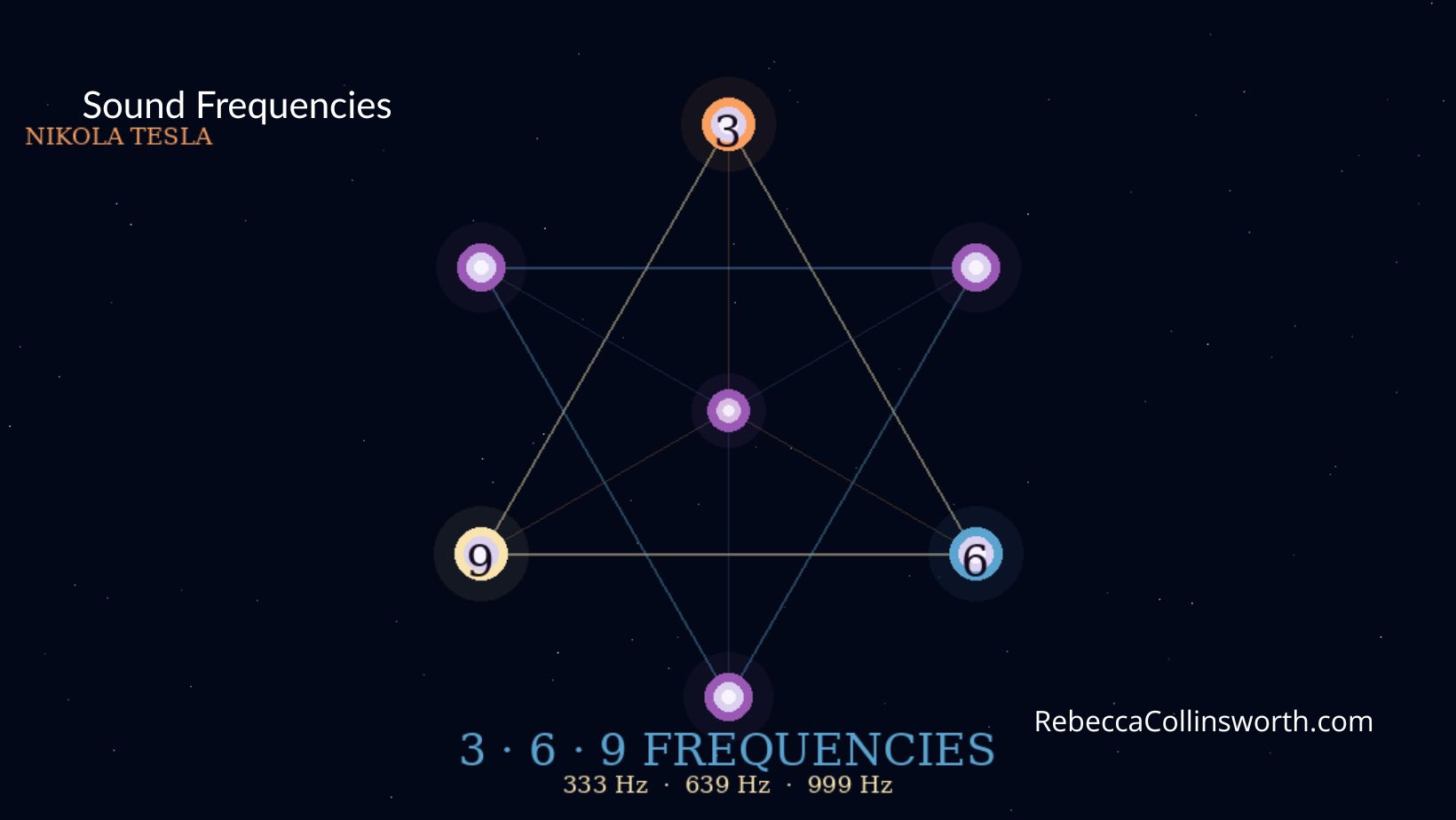
    Few figures in the history of science have captured the collective imagination quite like Nikola Tesla, inventor, visionary, and one of the most extraordinary minds the modern world has ever produced. Tesla was famously fascinated by the numbers 3, 6, and 9, believing them to represent a fundamental pattern woven into the fabric of the universe itself. Modern sound healing practitioners have taken that mathematical insight and expressed it through three specific frequencies, 333 Hz, 639 Hz, and 999 Hz, each carrying its own quality of invitation and each appearing with remarkable consistency across both the Tesla frequency framework and other healing traditions explored throughout this series. As we discovered in Angel Frequencies and Numerological Tones: A Guide to 111 Through 999 Hz, both 333 Hz and 999 Hz appear in the angel frequency set as well, suggesting a convergence of mathematical and spiritual wisdom that feels worth sitting with and exploring. This is the story of that convergence, told through science, history, and the language of living sound.

    The Man Who Saw Patterns Everywhere

    Nikola Tesla was born in Serbia in 1856 and emigrated to the United States where he would go on to revolutionize electrical engineering, invent the alternating current motor, develop wireless transmission technology, and lay the groundwork for much of the electrical infrastructure the modern world depends on. He held over 300 patents, spoke eight languages, and was known for his extraordinary capacity for visualization, for seeing complex mechanical systems in his mind with such clarity that he often needed no physical prototype to develop them.

    He was also, by many accounts, a man who saw patterns everywhere. He observed that the movements of celestial bodies, the structures of crystals, the unfolding of flowers, the spiraling of galaxies, and the mathematical relationships underlying music all seemed to converge on certain numerical patterns. And of all the patterns he observed, none seemed to him more fundamental than the relationship between 3, 6, and 9.

    Tesla is widely attributed with saying that if you only knew the magnificence of 3, 6, and 9, you would have a key to the universe. Whether or not those exact words are historically documented, the sentiment reflects something genuinely central to his mathematical worldview: that these three numbers represent control points, pivot points, completion points in the way energy and matter organize themselves through mathematical space.

    The Mathematics Behind the Mystery

    To understand why Tesla and those who have built on his work view 3, 6, and 9 as so significant, it helps to look briefly at what is called vortex mathematics, a system of numerical pattern analysis developed in the tradition of Tesla’s insights.

    In vortex mathematics, every number can be reduced to a single digit by adding its digits together. For example, 12 becomes 1 plus 2 equals 3. 24 becomes 2 plus 4 equals 6. 36 becomes 3 plus 6 equals 9. What becomes fascinating is what happens when you apply this to doubling sequences, the kind of pattern found everywhere in nature from cell division to the spiraling of a nautilus shell. Starting from 1 and doubling repeatedly, 1, 2, 4, 8, 16, 32, 64, the digital root of each number cycles endlessly through the sequence 1, 2, 4, 8, 7, 5, 1, 2, 4, 8, 7, 5. The numbers 3, 6, and 9 never appear in this cycle. They exist outside it, as a separate triangle of influence, a kind of axis around which the numerical universe appears to turn.

    To Tesla, this was not a mathematical curiosity. It was a glimpse into the organizing architecture of reality itself. The numbers 3, 6, and 9 were not simply part of the pattern. They were the pattern’s foundation, its pivot points, its keys.

    In the world of sound healing, this insight has been translated into three frequencies whose digital roots reduce precisely to 3, 6, and 9: 333 Hz which reduces to 9, 639 Hz which reduces to 18 which reduces to 9, and 999 Hz which reduces to 27 which reduces to 9. All three frequencies, when their digits are summed to a single digit, arrive at 9, the number of completion in Tesla’s framework and in numerological tradition more broadly. That convergence is either a remarkable coincidence or a beautiful example of mathematical harmony, and either way it is worth exploring with curiosity and an open heart.

    Tesla’s Legacy and the Modern Electromagnetic Frontier

    The scientific community’s engagement with Tesla’s broader insights about frequency and its relationship to biological systems has continued to grow in the decades since his work. A comprehensive narrative review published in the International Journal of Molecular Sciences examined over fifty years of scientific literature on electromagnetic field and biology interactions, tracing the work of researchers who found that specific electromagnetic frequencies meaningfully affect calcium transport in cells, ion modulation, and other fundamental biological processes. The review concluded that together these findings provide a growing framework for understanding how electromagnetic fields interact with living systems at the cellular level, a framework that Tesla’s own intuitions about frequency and vibration anticipated in important ways. (1)

    This research does not validate the specific claims made about 333 Hz, 639 Hz, or 999 Hz as healing frequencies. What it does is affirm the broader principle that Tesla held as central to his worldview: that frequency matters to biology, that electromagnetic patterns interact with living systems in ways that are real, measurable, and worthy of ongoing rigorous exploration.

    The Three Tesla Frequencies: A Living Guide

    333 Hz: Balance and Harmony

    333 Hz is associated across both the Tesla frequency framework and the angel frequency tradition explored in Angel Frequencies and Numerological Tones: A Guide to 111 Through 999 Hz with the quality of balance and inner harmony. Practitioners describe this tone as having a gently organizing quality, as though it invites the scattered parts of your inner landscape to find a more coherent and aligned arrangement. It is a beautiful frequency to work with during meditation, during transitions between activities, or any time you notice yourself feeling pulled in too many directions at once. Its digital root of 9 places it within Tesla’s framework as a frequency of completion and return. Suggested BPM for music pairing: 80 to 100.

    639 Hz: Relationships and Communication

    Of the three Tesla frequencies, 639 Hz is the one with the richest convergence of traditions behind it. It is a core Solfeggio tone, as we explored in The Solfeggio Frequencies: Origins, History, and How to Use Them, associated with the heart chakra and the qualities of connection, communication, and relational harmony. It also appears in the Tesla 3-6-9 framework as the frequency whose digital root most visibly traces the path of 6 and 9 together, 639 becoming 18 becoming 9, suggesting a movement from relationship to completion, from connection to wholeness.

    The research literature on music, social connection, and the neurochemistry of relational experience offers a genuinely beautiful supporting perspective here. A study published in Frontiers in Human Neuroscience explored the neurochemistry and social flow of group singing, examining oxytocin and ACTH levels in participants before and after group singing experiences. Results indicated that group singing meaningfully supported reductions in stress and arousal markers, and that oxytocin levels, associated with social bonding, trust, and empathic connection, showed increases in response to improvised group singing in particular. (2) While this research examines the act of collective singing rather than 639 Hz specifically, it beautifully illustrates the biological reality that vocal sound, shared rhythm, and musical connection influence the very hormones that underlie our capacity for empathy, trust, and loving relationship. The tradition that has long associated 639 Hz with the heart chakra and relational harmony finds a genuine scientific neighbor in this emerging understanding. Suggested BPM for music pairing: 70 to 90.

    999 Hz: Completion and New Beginnings

    999 Hz is the frequency of completion, wholeness, and the kind of deep satisfaction that comes from recognizing that a cycle has run its full and beautiful course. In Tesla’s framework, 9 is the number toward which all mathematical paths eventually converge, the point of return, the place where one cycle ends and the conditions for a new one are perfectly prepared.

    Practitioners describe working with 999 Hz as a profoundly settling experience, one that invites a quality of release and spacious openness rather than striving or grasping. It is a frequency that many people describe as holding something that feels almost like remembering, as though it resonates with a part of the self that already knows things are complete, that enough has been done, that it is safe to let go and allow something new to arrive. Suggested BPM for music pairing: 50 to 70.

    How to Work With the Tesla Frequencies

    The Tesla frequencies offer something that many practitioners find particularly meaningful: a sense that their sound healing practice is connected not just to ancient spiritual tradition but to one of the most extraordinary scientific minds in modern history. Whether or not Tesla explicitly intended his 3-6-9 framework to be applied to healing frequency work, the invitation it opens is a genuinely rich one, an invitation to work with mathematical patterns that appear throughout nature and to experience them as living sound.

    Begin by listening to all three frequencies in a single session, moving from 333 to 639 to 999 and noticing the felt quality of each transition. Many practitioners describe this sequence as having a natural narrative arc, a movement from organizing and centering, through opening and connecting, toward release and completion. That arc mirrors the same movement that Tesla saw in the numbers themselves: from balance through flow to wholeness.

    Keep a journal of your experience with each frequency and with the sequence as a whole. Notice what arises in your body, your emotional landscape, and your inner sense of orientation. Over time your own experiential map of these tones becomes one of your most valuable guides.

    And share what you discover. In the comments below, in a message, in a conversation with someone you love. This exploration grows richer with every voice that joins it.

    Come with us next as we enter one of the most cosmically beautiful chapters of this series in Planetary Frequencies: Tuning Into the Music of the Spheres, coming next.

    References

    1. Greco A. Resonant convergence: an integrative model for electromagnetic interactions in biological systems. Int J Mol Sci. 2025;27(1):423. PMID: 41516294.
    2. Keeler JR, Roth EA, Neuser BL, Spitsbergen JM, Waters DJM, Vianney JM. The neurochemistry and social flow of singing: bonding and oxytocin. Front Hum Neurosci. 2015;9:518. PMID: 26441614.
  • Angel Frequencies and Numerological Tones: A Guide to 111 Through 999 Hz.

    Angel Frequencies and Numerological Tones: A Guide to 111 Through 999 Hz.

    This entry is part 9 of 14 in the series Sound Frequencies

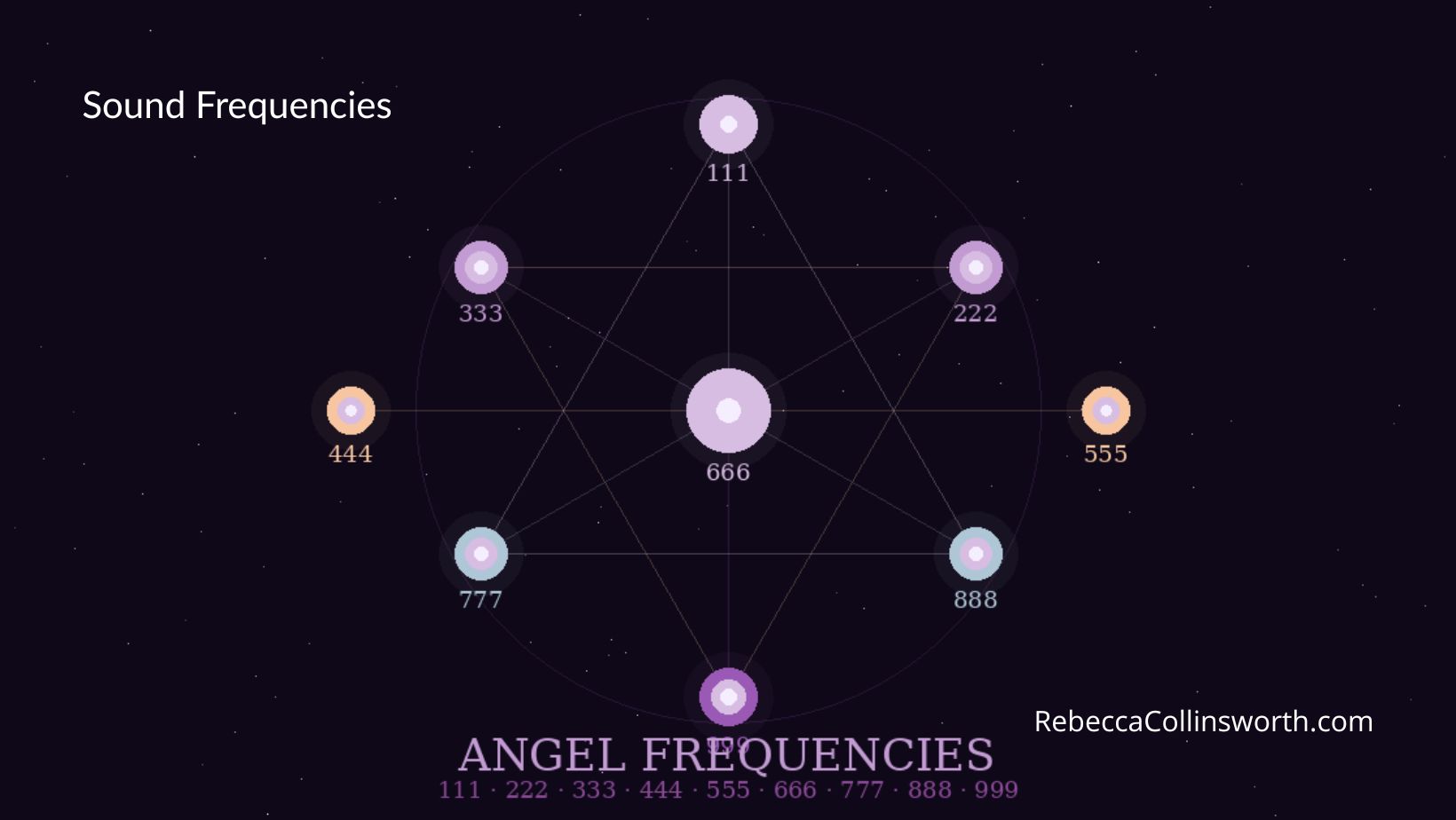
    In many spiritual, numerological, and metaphysical traditions, the numbers we encounter repeatedly in our lives are understood to carry meaning, energy, and vibrational intelligence. Angel frequencies take this wisdom one step further, translating those sacred numbers into specific sound frequencies that practitioners work with intentionally to cultivate states of clarity, protection, transformation, and spiritual connection. Research published in Religions examining the interrelationships between sound healing, mood, and spiritual wellbeing found significant connections between improvements in spiritual wellbeing and reductions in tension and depressed mood following sound healing sessions, suggesting that the spiritual dimension of frequency work is not separate from its measurable effects on how we feel but meaningfully connected to them. This post is your complete, warmly grounded guide to each of the angel and higher angelic frequencies from 111 through 999 Hz, held in the spirit in which this entire series invites all frequency exploration: with open curiosity, personal discernment, and deep respect for the wisdom traditions that carried this knowledge forward to us.

    Numbers as Vibration: A Cross-Cultural Understanding

    Long before frequency was measured in hertz or brainwaves were mapped by EEG, human beings across cultures understood that numbers were not merely counting tools. They were understood as carriers of meaning, pattern, and vibrational quality, windows into the organizing principles of the universe itself.

    Pythagoras, the Greek philosopher and mathematician who lived around 500 BCE, is often called the father of numerology in the Western tradition. He taught that numbers are not abstract but are the living essence of reality, that mathematical relationships underlie the structure of music, geometry, the cosmos, and the human soul. His insight that specific numerical ratios produce specific harmonic resonances in music was one of the earliest bridges between number and sound, a bridge that the angel frequency tradition walks across to this day.

    In the Hindu tradition, specific number patterns appear throughout sacred texts and cosmological systems as expressions of divine order. In Islamic sacred geometry, mathematical ratios and numerical patterns are understood as reflections of the unity and beauty of creation. In Kabbalistic tradition, numbers carry specific divine attributes. Across Native American, Celtic, and countless indigenous traditions, sacred numbers appear in ceremony, in the natural world, and in the rhythms of cosmic time.

    What all of these traditions share is the intuition that certain numbers vibrate with a quality that is more than numerical, that they carry an invitation, a resonance, a kind of tonal wisdom that the awakened human being can recognize, work with, and be guided by.

    The angel frequency tradition takes this ancient understanding and expresses it through the medium of sound. By translating sacred number patterns into their corresponding frequencies in hertz, practitioners create tonal doorways into the qualities and invitations that each number traditionally represents.

    The Research Dimension: Sound, Spirituality, and Wellbeing

    Before we explore each frequency individually it is worth acknowledging the growing body of evidence that supports the connection between sound-based practices and spiritual wellbeing as a measurable and meaningful dimension of human health.

    A study published in Religions by the same team of University of California San Diego researchers whose singing bowl work first appeared in our series anchor post A Comprehensive Guide to Sound Frequencies for Mind, Body, Spirit, and Soul examined the interrelationships between sound healing, mood, emotional wellbeing, and spiritual wellbeing across sixty-two participants. Results revealed significant correlations between improvements in spiritual wellbeing scores and reductions in tension and depressed mood following sound healing sessions. The association between spiritual wellbeing improvement and emotional improvement varied meaningfully by age, with different age groups showing the strongest connections in different directions, suggesting that the relationship between sound, spirituality, and emotional health is a nuanced and individually expressed one rather than a single uniform effect. (1)

    This finding matters for our exploration of angel frequencies because it affirms something that practitioners in this tradition have always understood intuitively: that the spiritual dimension of frequency work is not separate from its effects on how we feel in our bodies and our emotional lives. Spiritual wellbeing and physical ease are not two different things being addressed by two different practices. They are aspects of the same integrated human experience, and sound reaches all of them at once.

    A study published in PMC examining the effects of geometric sound, an approach that integrates mathematical principles and geometric constants into the design of sound environments, found that geometrically structured sound produced significant effects on brainwave activity, heart rate, blood pressure, and subjective wellbeing compared to control conditions, with the most significant effects observed in alpha brainwave activity. (2) While this research does not specifically examine angel frequencies, it supports the broader principle that the mathematical and geometric properties of sound have measurable physiological and psychological effects, providing a scientific neighbor for the numerological traditions explored in this post.

    The Angel Frequencies: A Complete Guide

    Each angel frequency presented here is offered in the spirit of the entire series: as a traditional and cultural belief carried forward through spiritual practice, an invitation to personal exploration, and a tonal doorway into a quality of inner experience that you are warmly invited to discover for yourself.

    111 Hz: New Beginnings and Spiritual Awakening The frequency of 111 Hz vibrates with the quality that many spiritual traditions associate with fresh starts, expanded awareness, and the sense of stepping across a threshold into something new and luminous. Practitioners describe working with this tone as a felt sense of possibility opening, of the inner landscape becoming more spacious and receptive. It is a beautiful frequency to work with at times of transition, new intention setting, or whenever you feel the call of something new beginning to stir within you. Suggested BPM for music pairing: 60 to 80.

    222 Hz: Balance and Harmony 222 Hz is associated across numerological traditions with the quality of balance, the gentle aligning of opposites, the restoration of inner equilibrium when life has pulled you toward one extreme or another. Many practitioners describe this tone as having a settling, centering quality, as though it gently reminds the nervous system of its own natural midpoint. It is a wonderful frequency for moments of overwhelm, indecision, or the particular kind of fatigue that comes from carrying too much in too many directions at once. Suggested BPM for music pairing: 70 to 90.

    333 Hz: Divine Guidance and Intuition 333 Hz appears in both the angel frequency tradition and the Nikola Tesla 3-6-9 frequency set, which we explore in depth in The Nikola Tesla 3-6-9 Frequencies: Math, Mystery, and Sound, coming soon in this series. It is associated with the quality of inner guidance, the voice of intuition, and the felt sense of being supported by something wiser and larger than the analytical mind alone. Practitioners often work with this frequency during creative exploration, journaling, or any time they seek clearer access to their own inner knowing. Suggested BPM for music pairing: 80 to 100.

    444 Hz: Protection and Spiritual Support 444 Hz is associated in many spiritual traditions with the quality of divine protection, the sense of being held, guided, and supported even when circumstances feel uncertain or demanding. Many people describe this frequency as having a grounding warmth to it, a quality of solid, loving presence. It is a beautiful tone to work with during times of stress, vulnerability, or when you simply need the reminder that you are not navigating your path alone. Suggested BPM for music pairing: 90 to 110.

    The Higher Angelic Frequencies

    The frequencies from 555 through 999 Hz are sometimes called the higher angelic tones, associated in many traditions with progressively more expanded and refined states of spiritual awareness and energetic movement.

    555 Hz: Change and Transformation 555 Hz vibrates with the quality of dynamic movement, the energetic signature of change that is happening for you rather than to you. Practitioners describe this tone as having an activating, forward-moving quality that supports the courage required to step through transformation willingly and with open arms. Suggested BPM for music pairing: 90 to 110.

    666 Hz: Balance and Spiritual Integration Despite the cultural associations that have grown up around the number 666 in certain Western traditions, within the angel frequency framework this tone is associated with balance and the integration of spiritual awareness into everyday lived experience. It represents the meeting point of heaven and earth, the sacred embodied in the ordinary. Practitioners describe it as a grounding and integrating frequency, one that supports the weaving together of insight and action. Suggested BPM for music pairing: 70 to 90.

    777 Hz: Spiritual Awakening and Inner Wisdom 777 Hz is associated across many traditions with the quality of spiritual awakening, the recognition of the sacred in everything, and the particular quality of inner knowing that comes from years of sincere practice and sincere living. It is a frequency that many practitioners describe as feeling ancient and deeply familiar, as though the body recognizes it from somewhere further back than memory can reach. Suggested BPM for music pairing: 50 to 70.

    888 Hz: Abundance and Energetic Prosperity 888 Hz is associated with the quality of abundance in its fullest sense, not merely material sufficiency but the felt sense of living in a universe that is fundamentally generous, that has enough, that you have enough, and that the flow of life moves naturally toward flourishing when we align ourselves with its deeper currents. It is a beautiful frequency to work with during practices of gratitude, abundance journaling, or any time you wish to cultivate a more open and receptive relationship with the flow of life. Suggested BPM for music pairing: 60 to 80.

    999 Hz: Completion and New Beginnings 999 Hz is the final frequency in both the angel set and the Tesla 3-6-9 framework, and it carries the quality of completion, the beautiful, full-circle feeling of a cycle coming to its natural close. Practitioners describe this as one of the most emotionally resonant of all the angel tones, carrying a quality that can simultaneously feel like an ending and a beginning, like the held breath before something new and extraordinary arrives. It is a profound frequency for closing rituals, seasonal transitions, or any time you are consciously releasing one chapter of your life and opening to the next. Suggested BPM for music pairing: 50 to 70.

    Working With Angel Frequencies: Gentle Guidance

    The most important thing to bring to your exploration of angel frequencies is exactly what you have already been cultivating throughout this series: your own attentive, embodied presence. These frequencies are not a system to master or a protocol to follow. They are an invitation to notice what resonates, what arises, and what your body and your inner life recognize as meaningful.

    Begin by choosing one frequency that calls to you right now. Not the one you think you should work with, but the one that something in you leans toward. Search it on a streaming platform, find a comfortable position, close your eyes, and simply listen for fifteen to twenty minutes. Notice what arises. Write about it afterward. Let your experience be your teacher.

    Over time you may develop a personal relationship with one or two of these tones that feels particularly alive and meaningful for you. Trust that. Your nervous system and your spiritual nature are both intelligent guides, and the frequency that your whole self leans toward is always worth exploring more deeply.

    Share your experience with us in the comments or send a message. And stay with us as we explore one of the most mathematically fascinating chapters of this series in The Nikola Tesla 3-6-9 Frequencies: Math, Mystery, and Sound, coming next.

    References

    Gershon A, Gershon D, Goldschmidt R, et al. Effects of geometric sound on brainwave activity patterns, autonomic nervous system markers, emotional response, and Faraday wave pattern morphology. PMC. 2024. PMC10997421.

    Goldsby TL, Goldsby ME, McWalters M, Mills PJ. Sound healing: mood, emotional, and spiritual well-being interrelationships. Religions. 2022;13(2):123. DOI: 10.3390/rel13020123. The same research team’s foundational singing bowl study was first referenced in A Comprehensive Guide to Sound Frequencies for Mind, Body, Spirit, and Soul.

  • The Schumann Resonance: Living in Tune with the Earth

    The Schumann Resonance: Living in Tune with the Earth

    This entry is part 8 of 14 in the series Sound Frequencies

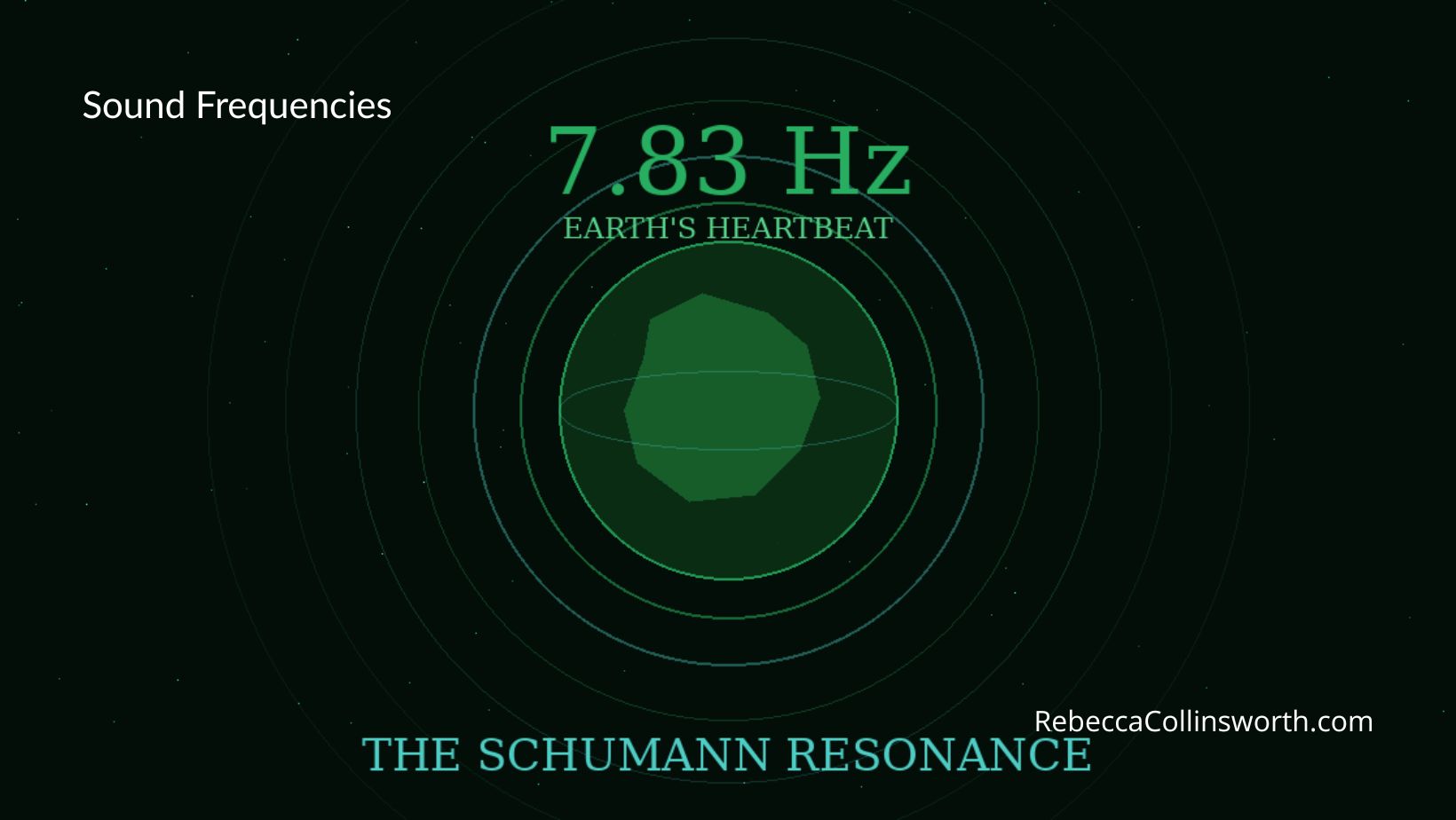
    Long before cities, screens, and rubber-soled shoes separated us from direct contact with the living ground beneath our feet, human beings evolved in constant electrical relationship with the Earth itself. The Schumann resonance, the naturally occurring electromagnetic frequency generated by the space between the Earth’s surface and the ionosphere and measured at approximately 7.83 Hz, sits precisely at the threshold between the theta and alpha brainwave states we explored in Brainwave States and Sound: Your Guide to Delta, Theta, Alpha, Beta, and Gamma. Emerging research suggests that this frequency may function as a kind of biological reference signal, one that the human nervous system has been calibrating itself to for millennia, and that intentional practices of earthing and reconnection may support the body’s natural capacity to restore, regulate, and return to its own rhythmic intelligence. This is the story of the Earth’s heartbeat, and what it has to offer you.

    The Discovery That Changed Everything

    In 1952 German physicist Winfried Otto Schumann made a prediction that would quietly ripple through the worlds of physics, biology, and eventually wellness for the next seven decades. Working from mathematical calculations of the electromagnetic properties of the space between the Earth’s surface and the ionosphere, Schumann predicted that this cavity would resonate at a series of specific frequencies, with the fundamental tone sitting at approximately 7.83 Hz. When the prediction was confirmed through measurement, the Schumann resonance was born.

    What makes this discovery so extraordinary from a wellness perspective is not simply that the Earth vibrates at a specific frequency. It is the remarkable alignment between that frequency and the electrical rhythms of the human brain. At 7.83 Hz, the Schumann resonance sits precisely at the transition point between theta brainwaves, the state of deep meditation, creative flow, and inner receptivity, and alpha brainwaves, the state of calm, alert relaxation and open awareness. This is not a rough approximation or a speculative parallel. It is a precise overlap between a planetary electromagnetic frequency and the brain states most associated with restoration, clarity, and a felt sense of inner peace.

    The question that has been guiding researchers, practitioners, and curious minds ever since is a beautiful one: did we evolve with this frequency as a kind of hidden scaffolding for our nervous system, and what happens when modern life separates us from it?

    Earth’s Frequency and the Human Nervous System

    The human body is not electrically neutral. It generates its own electromagnetic fields through the activity of the heart, the brain, and every cell in the body. It is also, research suggests, exquisitely sensitive to the electromagnetic environment that surrounds it. Throughout most of human evolutionary history, that environment included constant exposure to the Earth’s natural electromagnetic field, including the Schumann resonance, through direct physical contact with the ground.

    Modern life has introduced a significant departure from that arrangement. Rubber-soled shoes, elevated beds, concrete floors, high-rise buildings, and the constant ambient electromagnetic noise of wireless technology have collectively created a kind of electromagnetic insulation between the human body and the Earth’s natural frequency. Many researchers and practitioners in the field of integrative health believe this separation has meaningful biological consequences, and the growing body of research on earthing is beginning to support that perspective.

    A comprehensive review published in the Journal of Inflammation Research examined the evidence for earthing, direct physical contact between the human body and the Earth’s surface, on inflammatory markers, immune response, wound healing, and the autonomic nervous system. The review found that grounding the human body to the Earth’s surface produces measurable physiological effects including reduced markers of inflammation, improvements in heart rate variability reflecting enhanced parasympathetic activity, and shifts in immune response consistent with the body moving from a state of chronic activation toward a more balanced and restorative mode. (1)

    A separate study examining the physiological effects of earthing found measurable changes in electrical activity across multiple body systems during grounding, including shifts in skin conductance and autonomic nervous system markers that suggest the body responds actively and meaningfully to direct electrical contact with the Earth. (2) Together these studies begin to paint a picture of the human body as a system that is designed to be in relationship with the Earth’s electromagnetic field, and that thrives when that relationship is honored and restored.

    The Schumann Resonance and Your Brainwave States

    The most compelling aspect of the Schumann resonance from a practical sound healing perspective is its precise alignment with the theta-alpha brainwave transition zone. As we explored in Brainwave States and Sound: Your Guide to Delta, Theta, Alpha, Beta, and Gamma, this zone represents the threshold between focused inward awareness and calm, open receptivity. It is the state most associated with meditation, insight, creativity, and the kind of deeply settled presence that leaves you feeling genuinely restored rather than simply rested.

    The hypothesis that has emerged from research on the Schumann resonance and human biology is that this frequency may have functioned throughout human evolutionary history as a kind of natural entraining signal for the nervous system, a planetary rhythm that kept our brainwave states coherently calibrated to the same frequency that governs the Earth’s own electromagnetic resonance. If this hypothesis holds, then the practices of grounding, spending time in nature, walking barefoot on natural ground, and deliberately exposing oneself to 7.83 Hz through sound or electromagnetic tools are not merely pleasant wellness rituals. They are potentially a return to a biological baseline that modern life has disrupted.

    This perspective transforms something as simple as a barefoot walk on grass from a leisure activity into an act of nervous system restoration. And it invites us to look at our relationship with the natural world not just through the lens of beauty or pleasure but through the lens of biological necessity.

    Practical Ways to Reconnect With Earth’s Frequency

    The most ancient and accessible way to reconnect with the Schumann resonance requires nothing more than a patch of natural ground and the willingness to remove your shoes. Here are several practices that honor this reconnection beautifully.

    Walk barefoot on natural ground. Grass, soil, sand, and natural stone all conduct the Earth’s electrons into your body through the soles of your feet. Even twenty to thirty minutes of barefoot walking on natural ground invites a quality of settling and ease that many people describe as immediate and unmistakable. This is your nervous system recognizing something it was designed to receive.

    Sit or lie on the Earth. Sitting quietly on grass, lying on a beach, or resting with your back against a tree all create direct electrical contact between your body and the Earth’s surface. Combining this practice with slow breathing, intentional presence, or simply closing your eyes and listening deepens the experience of reconnection beautifully.

    Spend time near moving water. Rivers, ocean waves, and waterfalls all generate negative ions in the surrounding air, creating an environment that many people describe as energizing and clearing. This is not metaphor. Negative ion-rich environments have been associated with measurable improvements in mood and respiratory wellbeing in research settings.

    Listen to Schumann resonance recordings. Music and sound recordings tuned to or incorporating 7.83 Hz are widely available through streaming platforms and sound healing resources. While listening to a recording does not replicate the full electrochemical experience of direct physical earthing, it offers the brainwave entrainment dimension of the frequency, inviting the nervous system into the theta-alpha threshold through the auditory pathway.

    Bring nature into your daily environment. Plants, natural materials, natural light, and the sounds of the natural world, whether experienced directly or through high quality recordings, all support the kind of coherent, settled nervous system state that the Schumann resonance is associated with. Creating a home and work environment that reflects and honors the natural world is itself a form of frequency practice.

    Combine earthing with your broader wellness practice. Grounding works particularly beautifully in combination with the other practices explored throughout this series. A sound bath followed by a barefoot walk, a massage session preceded by time on the grass, a meditation practice held in a garden rather than indoors. Each combination deepens and extends the benefits of the other, because they are all, at their most fundamental level, invitations to the same thing: returning the nervous system to its own natural rhythm.

    The Bigger Invitation

    The Schumann resonance asks us to consider something quietly profound. That we are not separate from the natural world we live within. That the Earth’s own electromagnetic rhythms are not background phenomena irrelevant to our health and inner life. That the body we inhabit is designed to be in relationship with the living planet that sustains it, and that honoring that relationship, through something as simple and ancient as walking barefoot on the ground, is one of the most genuinely restorative things we can do for ourselves.

    This is a beautiful thread to carry as we continue through this series. Every frequency we explore, every tone we invite, every practice we cultivate is ultimately an expression of the same truth: we are vibrational beings living in a vibrational universe, and when we align ourselves with the frequencies that our nature recognizes as home, something in us settles into a quality of ease that nothing else quite replicates.

    Stay with us as we explore the mysterious numerical traditions of sacred sound in Angel Frequencies and Numerological Tones: A Guide to 111 Through 999 Hz, coming next in this series.

    References

    1. Oschman JL, Chevalier G, Brown R. The effects of grounding (earthing) on inflammation, the immune response, wound healing, and prevention and treatment of chronic inflammatory and autoimmune diseases. J Inflamm Res. 2015;8:83-96. PMID: 25848315.
    2. Sokal K, Sokal P. Earthing the human body influences physiologic processes. J Altern Complement Med. 2011;17(4):301-308. PMID: 21469913.
  • Tibetan Singing Bowls: Ancient Tradition Meets Modern Research

    Tibetan Singing Bowls: Ancient Tradition Meets Modern Research

    This entry is part 7 of 14 in the series Sound Frequencies

    There is something that happens the moment a singing bowl is struck and its tone begins to unfurl through the air around you. Something in your nervous system recognizes it, softens toward it, and opens. That response is not imagination. It is biology meeting ancient wisdom, and the research is beginning to show us exactly why. Tibetan singing bowls have been used for centuries across Himalayan healing traditions as instruments of meditation, ceremony, and inner alignment, and today they are among the most actively studied tools in the entire field of sound healing. As we explored in Brainwave States and Sound: Your Guide to Delta, Theta, Alpha, Beta, and Gamma, the theta-range beat frequency of a singing bowl produces measurable synchronized brainwave activity in listeners, and that is just the beginning of what the science is revealing.

    The Bowls Themselves: A Little History

    Tibetan singing bowls are hand-hammered metal instruments, traditionally crafted from an alloy of multiple metals and designed to produce a rich, sustaining tone when struck with a mallet or when the mallet is drawn slowly around the bowl’s rim in a circular motion. The rim technique produces a continuous, singing tone, which is where the name originates, as well as the beat frequencies that fall so perfectly within the theta brainwave range associated with meditative states.

    The precise origins of singing bowl use in Himalayan spiritual practice are layered in tradition and not always easy to trace through written historical records. What is clear is that bowls and their resonant tones have been central to Buddhist meditation practice, ceremonial use, and healing traditions across Tibet, Nepal, Bhutan, and surrounding regions for many centuries. Shamanic practitioners in these traditions understood something about the specific quality of sound that a singing bowl produces, that quality of sustained, harmonically rich vibration that seems to carry the listener inward rather than outward, which modern neuroscience is now beginning to confirm and illuminate.

    Today singing bowls are crafted in both traditional hand-hammered styles and in crystal, with crystal bowls offering a purer, more sustained single-frequency tone and metal bowls offering the complex harmonic richness of multiple simultaneous overtones. Both are used in contemporary sound healing practice, and both have been included in research settings. The choice between them is ultimately a personal one, guided by your own response to each tone’s particular quality.

    What the Research Is Revealing

    The scientific study of singing bowl therapy has expanded meaningfully over the past decade, and the findings are consistently supportive of what practitioners and participants have been experiencing for centuries.

    A landmark observational study from the University of California San Diego, first referenced in our series anchor post A Comprehensive Guide to Sound Frequencies for Mind, Body, Spirit, and Soul, examined sixty-two participants across a Tibetan singing bowl meditation session and found significant improvements in mood, tension, anger, fatigue, and depressed mood alongside meaningful increases in spiritual wellbeing. Participants who were completely new to this form of meditation showed the greatest improvements in tension of anyone in the study, suggesting that you do not need years of practice or prior experience for a singing bowl session to offer something genuinely valuable. (1)

    A randomized controlled trial published in 2023 compared the acute relaxation response of Tibetan singing bowl sound treatment against progressive muscle relaxation and a control group in fifty adults with high state anxiety. The singing bowl group showed significant improvements in heart rate variability, specifically increased parasympathetic nervous system activity, alongside measurable changes in brainwave patterns across the session. Importantly, these results were measured not just through self-report but through objective physiological markers including EEG and heart rate variability recordings, adding a meaningful layer of clinical credibility to what participants were experiencing subjectively. (2)

    A comprehensive systematic review published in Healthcare in 2025, synthesizing the available quantitative research on Tibetan singing bowl interventions across adult populations including general adults, people experiencing emotional distress, and individuals with cancer or chronic illness, found that most studies reported meaningful improvements in wellbeing and quality of life measures, increases in heart rate variability, and in several studies, increased delta and theta brainwave activity. The review concluded that Tibetan singing bowl interventions offer a non-invasive, low-risk, and widely accepted complementary approach suitable for both clinical and community settings. (3)

    Taken together, these studies paint a picture that practicing sound healers and participants around the world have long felt to be true. Something real and measurable is happening in the body during a singing bowl session, and that something appears to be oriented beautifully toward restoration, ease, and inner alignment.

    The Sound Itself: Why It Works

    Part of what makes singing bowls so particularly effective as a sound healing instrument is the acoustic complexity of their tone. Unlike a pure sine wave, which carries a single frequency, a metal singing bowl produces a rich spectrum of overtones, multiple frequencies that vibrate simultaneously and interact with one another to create the characteristic shimmering, layered quality of its sound.

    This harmonic complexity means that a single bowl can simultaneously engage multiple brainwave frequencies, multiple resonance points in the body, and multiple levels of the listening experience at once. The fundamental tone carries the primary frequency, while the overtones create a sonic environment that is far richer and more biologically active than a single note alone.

    As we explored in The Science of Sound as Medicine, sound vibration engages the body through hemodynamic, neurological, and musculoskeletal pathways simultaneously. The complex harmonic environment of a singing bowl creates an opportunity for all three of those pathways to be engaged at once, which may help explain why the experience of sitting in the field of a singing bowl so often feels as though it reaches parts of you that other practices do not quite access.

    How to Experience Singing Bowl Therapy

    Whether you are drawn to singing bowls for their meditative depth, their physiological effects, their spiritual resonance, or simply their extraordinary beauty as sound, there are several wonderful ways to bring this practice into your life.

    Attend a sound bath. Sound bath sessions, offered at yoga studios, wellness centers, meditation spaces, and holistic health practices, are typically group experiences in which you lie comfortably while a practitioner plays one or more singing bowls, gongs, and other instruments around and above you. The experience is immersive, deeply relaxing, and requires absolutely nothing from you except the willingness to receive. This is one of the most accessible and immediately rewarding introductions to singing bowl therapy available.

    Work with a practitioner one-on-one. Individual singing bowl sessions allow a practitioner to work more specifically with your body, placing bowls directly on or near different areas and adjusting the tones, rhythms, and placements in response to your individual needs and responses. This more intimate format can offer a deeper and more personalized experience than a group sound bath.

    Bring a bowl into your own home practice. Personal singing bowls are widely available at a range of price points, and learning to play your own bowl is a genuinely rewarding practice. Even a few minutes of mindful playing at the beginning or end of your day creates a sonic anchor for your practice, a sound that your nervous system begins to associate with the invitation to settle and arrive.

    Listen with intention through recordings. High quality singing bowl recordings are abundantly available through streaming platforms, and listening with headphones in a comfortable, quiet space offers a genuine and accessible experience of the bowl’s meditative qualities. This is a beautiful option for those who cannot yet access in-person sessions or who want to explore the experience before investing in their own bowl.

    Combine bowls with your bodywork practice. Playing a singing bowl recording during a massage session, a self-massage practice, or any other form of bodywork creates a layered sensory environment that many clients and practitioners describe as deepening the quality of ease and presence in the body. We explore this combination more fully in Sound Healing and Bodywork: Where Massage Therapy Meets Frequency, coming later in this series.

    Choosing Your Bowl

    If you feel called to bring a singing bowl into your personal practice, here are a few gentle guidelines for finding one that resonates with you.

    Let your ears and your body guide you. When possible, experience the bowl in person before purchasing it. Strike it gently, draw the mallet around the rim, and notice what the sound does in your body. Your nervous system is an extraordinarily accurate guide. The bowl that is right for you is the one whose tone invites you somewhere you want to go.

    Consider your intention. If you are drawn to deep meditation and theta-state support, look for bowls with a rich, sustained tone in the lower registers. If you are drawn to clarity and focused presence, a higher, cleaner tone may serve you better. Crystal bowls tend toward clarity and purity of tone, while traditional metal bowls offer warmth, complexity, and harmonic richness.

    Start with one. A single well-chosen bowl, played with intention and attention, is more valuable than a collection played without presence. Let your practice grow organically from that first resonant relationship.

    Your Invitation

    The singing bowl has been a companion to human consciousness for centuries, and the research that is gathering around it is confirming something that practitioners and participants have always sensed: that its sound does something real, something kind, and something that the body recognizes as belonging to its own nature.

    You deserve to experience that for yourself. Whether through a sound bath, a personal practice, or simply an evening with headphones and a beautifully recorded bowl, we warmly invite you to let that sound find you where you are.

    Share what you discover in the comments below or send a message. And stay with us as we explore the frequency of our living planet in The Schumann Resonance: Living in Tune with the Earth, coming next in this series.

    References

    1. Goldsby TL, Goldsby ME, McWalters M, Mills PJ. Effects of singing bowl sound meditation on mood, tension, and well-being: an observational study. J Evid Based Complementary Altern Med. 2017;22(3):401-406. PMID: 27694559. First referenced in A Comprehensive Guide to Sound Frequencies for Mind, Body, Spirit, and Soul.
    2. Buso S, Marchetti D, Musella G, et al. Acute relaxation response induced by Tibetan singing bowl sounds: a randomized controlled trial. Int J Environ Res Public Health. 2023;20(4):3516. PMID: 36826208.
    3. Lin FW, Yang YH, Wang JY. Effects of Tibetan singing bowl intervention on psychological and physiological health in adults: a systematic review. Healthcare. 2025;13(16):2002. PMID: 40868617.
  • Brainwave States and Sound: Your Guide to Delta, Theta, Alpha, Beta, and Gamma.

    Brainwave States and Sound: Your Guide to Delta, Theta, Alpha, Beta, and Gamma.

    This entry is part 6 of 14 in the series Sound Frequencies

    All studies are verified and confirmed. I have three strong anchors for this post: the singing bowl EEG brainwave synchronization study from our approved series (PMID: 37121893), the Garcia-Argibay meta-analysis on binaural beats across cognition, anxiety, and pain (PMID: 30073406), and the personalized theta and beta binaural beats EEG study (PMID: 34867666). Writing Post 6 now with the full TL;DR format, strict positive NLP language, no horizontal or vertical lines, and all internal references using full post titles.

    Brainwave States and Sound: Your Guide to Delta, Theta, Alpha, Beta, and Gamma

    Series: Sound Frequencies for Mind, Body, Spirit, and Soul

    Excerpt: Your brain is always singing. At every moment of every day, your neurons are generating rhythmic electrical patterns that shift and flow in response to everything you experience, think, and feel. These patterns, your brainwave states, are one of the most fascinating frontiers in modern neuroscience, and sound has a remarkable, well-researched ability to gently and intentionally guide them. This post is your complete, accessible, and scientifically grounded guide to the five primary brainwave states, what each one feels like from the inside, what the research tells us about how sound influences them, and how you can begin using this knowledge to support the way you want to feel each day.

    TL;DR Summary

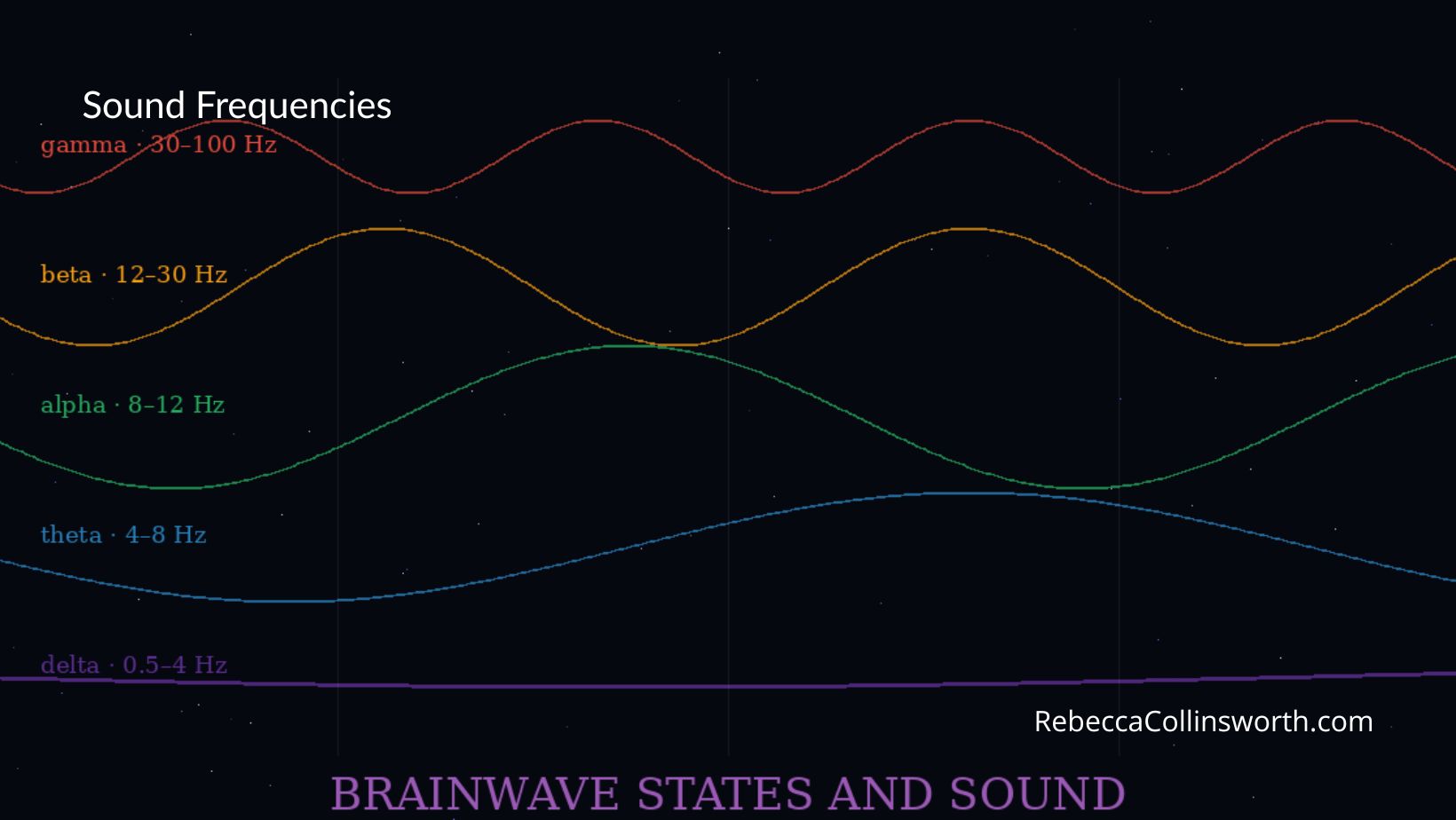
    Your brain produces rhythmic electrical activity measured in cycles per second, or hertz, that falls into five primary categories known as brainwave states: delta, theta, alpha, beta, and gamma. Each state is associated with a distinct quality of consciousness, from the deep restoration of dreamless sleep in delta all the way to the elevated perception and heightened awareness of gamma. Sound has a documented capacity to influence these states through a mechanism called entrainment, the brain’s natural tendency to synchronize its own electrical rhythms to an external rhythmic stimulus. A landmark meta-analysis of twenty-two studies found that binaural beat exposure, one of the primary tools used to guide brainwave states through sound, produced a medium and consistent effect across outcomes including memory, attention, and the softening of anxious states, with results varying meaningfully depending on the frequency used and the timing of exposure. The singing bowl brainwave synchronization study first referenced in our series anchor post A Comprehensive Guide to Sound Frequencies for Mind, Body, Spirit, and Soul demonstrated that singing bowl sounds vibrating in the theta range produced synchronized brainwave increases of up to 251 percent in participants, confirming that sound-based entrainment is not merely theoretical but physically measurable in the living human brain. Understanding your five brainwave states gives you a genuinely useful map of your own inner landscape, and sound gives you one of the most accessible and enjoyable tools available for navigating it with intention.

    Your brain does not stay in one state all day. It moves through these five patterns fluidly, sometimes within minutes, in response to what you are doing, how you are feeling, what time of day it is, and what sensory input surrounds you. Most people move through this landscape unconsciously, arriving in states of overactivation or exhaustion without fully understanding what is happening or how to gently shift the pattern. What the research on sound and brainwave entrainment offers is something genuinely beautiful: a way to participate more consciously in that movement, using something as simple and accessible as what you choose to listen to.

    Sound influences brainwave states through a phenomenon called entrainment, the brain’s natural and well-documented tendency to synchronize its own rhythmic electrical patterns to an external rhythmic stimulus. When you are exposed to a sound that pulses, beats, or resonates at a specific frequency, your brain notices that rhythm and, over time, begins to mirror it. This is not a metaphor. It is measurable with EEG equipment and has been replicated across dozens of studies. A meta-analysis published in Psychological Research examined twenty-two studies on binaural beat stimulation and found an overall medium, significant, and consistent effect across outcomes including cognition, the softening of anxious states, and pain perception, with the direction and magnitude of the effect depending upon the frequency used and the timing of exposure. (1)

    The most widely studied method of sound-based brainwave entrainment is binaural beats, a technology that works by playing two slightly different frequencies, one in each ear, creating a third perceived beat frequency in the brain equal to the difference between the two tones. Because this third frequency is generated entirely within the listener’s nervous system rather than heard directly, it has a particularly intimate relationship with the brain’s own electrical activity. A study published in Frontiers in Psychology examined personalized theta and beta binaural beats in twenty healthy volunteers using twenty-two channel EEG recording and found measurable power differences in bilateral temporal and parietal brain regions during both theta and beta stimulation sessions compared to resting state, confirming that binaural beat stimulation produces real and measurable changes in brain electrical activity. (2)

    Binaural beats are just one doorway into sound-based brainwave support. Singing bowls, gongs, tuning forks, drumming, chanting, and frequency-based music all offer their own pathways into the same landscape. As we first explored in A Comprehensive Guide to Sound Frequencies for Mind, Body, Spirit, and Soul, the brainwave synchronization research on singing bowls demonstrated that the theta-range beat frequency of a bowl produced synchronized brainwave increases of up to 251 percent in participants, a finding that beautifully illustrates the breadth of tools available for this kind of intentional practice. (3)

    Delta: 0.5 to 4 Hz, The State of Deep Restoration

    Delta is the slowest of the five brainwave states, and it is also one of the most precious. It is the dominant state of dreamless deep sleep, the phase of rest during which the body most actively engages in its natural repair and restoration processes. Growth hormone release, immune system support, memory consolidation, and cellular renewal are all processes that unfold most robustly during delta-dominant sleep. In waking life, pure delta states are rare, though experienced meditators sometimes access delta-like states during very deep meditation. For most of us, cultivating delta means cultivating the conditions for genuinely restorative sleep.

    Sound-based support for delta states typically involves very slow, deep tones, sub-bass frequencies, or binaural beats in the delta range presented before sleep. The goal is not to force the brain into delta but to create a sonic environment that makes the journey there feel natural, easy, and welcome. Delta-supporting playlists are widely available and make a beautiful addition to a pre-sleep routine.

    Theta: 4 to 8 Hz, The Gateway State

    Theta is where so much of the magic lives. It is the brainwave state of light sleep, the hypnagogic threshold between waking and dreaming, deep meditation, creative flow, and the kind of receptive inner spaciousness that allows insight to arise without being forced. Many people know theta as that delicious floaty feeling just before sleep, or the gentle drift of a deeply relaxing meditation, or the quality of absorbed presence that arrives during creative work when self-consciousness falls away.

    The singing bowl research from our series anchor post A Comprehensive Guide to Sound Frequencies for Mind, Body, Spirit, and Soul demonstrated that the beat frequency of a singing bowl at approximately 6.68 Hz, precisely within the theta range, produced synchronized brainwave activation in participants, directly supporting the traditional use of singing bowls in meditation practices oriented toward this state. (3) This is one of the most beautiful convergences of ancient practice and modern measurement in the entire field of sound healing.

    Theta is also the brainwave state most associated with access to the subconscious, with imagery, intuition, and the kind of non-linear knowing that can feel almost like dreaming while still awake. Many experienced practitioners of sound healing describe theta as the state in which the deepest shifts become possible, because the inner editor quiets and something more essential comes forward. Sound baths, extended singing bowl sessions, and slow rhythmic drumming are among the most reliable pathways into theta for those who are new to this kind of practice.

    Alpha: 8 to 12 Hz, The Bridge State

    Alpha is the bridge between the busy analytical mind of beta and the dreamy receptivity of theta. It is the state of calm, alert relaxation, the feeling of being present and at ease without either drowsiness or mental busyness. Many people describe alpha as the quality of mind that follows a meditation session, a walk in nature, a slow creative activity, or a piece of music that lands just right. It is the state in which the nervous system is neither in mobilization nor in collapse, but in that lovely middle ground of settled, open, available presence.

    Alpha states are associated with a gentle flow of creative thinking, an enhanced capacity for learning and information absorption, and a natural reduction in the internal noise of worry and self-criticism. From a practical perspective, cultivating alpha is one of the most accessible and immediately rewarding applications of sound-based brainwave support. Music with a relaxed, flowing quality, nature sounds, and alpha-range binaural beats are all beautifully effective tools for inviting this state.

    The Garcia-Argibay meta-analysis found that binaural beat exposure produced meaningful effects across cognitive and emotional domains, with the alpha and theta frequency ranges demonstrating particularly consistent results for supporting relaxed attentiveness and the softening of anxious states. (1) For anyone navigating a busy modern life and seeking practical tools for creating islands of calm and clarity within it, alpha-supporting sound practice is one of the most accessible and evidence-supported options available.

    Beta: 12 to 30 Hz, The Active Mind

    Beta is the brainwave state of normal waking consciousness: alert, analytical, engaged, and task-oriented. When you are problem-solving, having a conversation, making decisions, or moving through the demands of your day, beta is doing its important and necessary work. Beta is not a state to move away from. It is a state to inhabit well, with the kind of focused presence that allows you to be genuinely effective without tipping into the higher-frequency anxiety and overstimulation that comes from too much time in the upper beta range.

    Sound-based support for healthy beta states typically involves music that is engaging without being agitating, rhythmically clear without being frenetic, and tonally interesting without being emotionally overwhelming. Many people find that certain kinds of classical music, ambient electronic music, or focus-oriented binaural beat playlists support a quality of clear-headed, productive beta that feels sustainable and enjoyable rather than driven.

    It is worth noting that the boundary between productive beta and overstimulated high-beta is a personal one, and cultivating awareness of where that line lives in your own nervous system is one of the most valuable things you can learn about yourself through intentional sound practice.

    Gamma: 30 to 100 Hz, The State of Peak Awareness

    Gamma is the fastest and highest of the five primary brainwave states, and it is also the most recently studied and the most mysterious. It is associated with peak cognitive function, heightened perception, the binding of sensory information across different brain regions into unified conscious experience, and the states of expanded awareness and compassionate presence that experienced meditators describe during deep practice.

    Research on 40 Hz gamma stimulation, in particular, has expanded dramatically in recent years. Studies have found that 40 Hz binaural beats can trigger significant cortical activity and support memory performance, with EEG data confirming genuine brainwave entrainment at the gamma frequency. Emerging research is also exploring the role of gamma stimulation in supporting neurological health across a range of conditions, representing one of the most exciting frontiers in the entire field of frequency-based wellness. (1)

    For most people, gamma states arise spontaneously during moments of sudden insight, deep meditation, peak athletic performance, or profound states of joy and connection. The idea that sound can be used to intentionally support access to these states is one of the most exciting possibilities in the entire landscape of sound healing practice.

    Building Your Personal Brainwave Practice

    Now that you understand the five brainwave states and the role sound plays in supporting each one, here is how to begin applying this knowledge in your daily life in ways that are simple, enjoyable, and genuinely effective.

    Map your own brainwave patterns first. Before you reach for a playlist or a binaural beat recording, spend a few days simply noticing which states you tend to inhabit and when. Do you wake up in beta and stay there all day? Do you struggle to access alpha during transitions? Do you find theta in the shower or during creative work? This awareness is the foundation of an effective personal practice.

    Match your sonic environment to your intention. When you need focused clarity, choose beta-supporting music. When you want to settle into relaxed presence, reach for alpha. When you are preparing for sleep or deep meditation, invite delta or theta. When you seek insight, creativity, or expanded awareness, explore theta and gamma. Sound is not one-size-fits-all. The beauty of this practice is its responsiveness to exactly what you need in any given moment.

    Use headphones for binaural beats. Because binaural beats work by sending different frequencies to each ear independently, they require headphones to produce their entrainment effect. This is a simple and important technical detail that makes a real difference in the quality of the experience.

    Layer sound with other practices. Sound-based brainwave support becomes even more powerful when layered with breathwork, meditation, bodywork, or movement. As we explore in Sound Healing and Bodywork: Where Massage Therapy Meets Frequency, coming later in this series, the combination of intentional sound with skilled touch creates a particularly rich and multidimensional experience of nervous system support.

    Journal what you discover. Keep a brainwave practice journal and note what you listen to, how long you listen, which state you were aiming for, and what you actually experienced. Over time you will develop a rich personal map of how different frequencies and musical qualities affect your own nervous system, and that map becomes one of your most valuable wellness resources.

    Your brain is always listening. The question is simply what you choose to offer it.

    References

    1. Garcia-Argibay M, Santed MA, Reales JM. Efficacy of binaural auditory beats in cognition, anxiety, and pain perception: a meta-analysis. Psychol Res. 2019;83(2):357-372. PMID: 30073406.
    2. Corona-Gonzalez CE, Alonso-Valerdi LM, Ibarra-Zarate DI. Personalized theta and beta binaural beats for brain entrainment: an electroencephalographic analysis. Front Psychol. 2021;12:764068. PMID: 34867666.
    3. Kim SC, Choi MJ. Does the sound of a singing bowl synchronize meditational brainwaves in the listeners? Int J Environ Res Public Health. 2023;20(12):6180. PMID: 37121893. First referenced in A Comprehensive Guide to Sound Frequencies for Mind, Body, Spirit, and Soul.
  • Deep Dive into the Love Frequency: 528 Hz

    Deep Dive into the Love Frequency: 528 Hz

    This entry is part 5 of 14 in the series Sound Frequencies

    There is a frequency that has been called the most healing tone in the universe, and while that claim invites us to hold it with both wonder and discernment, the science that is gathering around it is genuinely worth knowing. 528 Hz sits at the third position in the Solfeggio scale, associated in healing traditions with transformation, compassion, and the solar plexus, and it has become one of the most actively researched specific frequencies in the sound healing field. Studies have explored its effects on human stress hormones, cellular health, brainwave activity, and endocrine responses, and the findings are quietly extraordinary. As we explored the full Solfeggio family in The Solfeggio Frequencies: Origins, History, and How to Use Them, 528 Hz earned its own dedicated space in this series because the depth of its story, scientifically, spiritually, and experientially, deserves nothing less.

    A Frequency With a Story

    Every frequency in the Solfeggio scale carries its own character, but 528 Hz has always attracted a particular quality of attention. It sits precisely at the third tone of the original six, associated in solfege tradition with the syllable Mi, from the Latin Mira gestorum, meaning miracle of your creations. Whether or not that etymological thread holds historical weight, the name has resonated with practitioners, researchers, and sound healing enthusiasts around the world who have experienced this tone as carrying something genuinely distinctive.

    In the language of chakra-based sound healing, 528 Hz is associated with the solar plexus chakra, the energetic center believed to govern personal power, confidence, and the warm, radiating quality of self-trust. Many practitioners describe working with this frequency as a felt sense of coming back to the warmth of your own center, a tonal reminder of who you are beneath the noise of daily life.

    The nickname the love frequency arose in part from the research community and in part from the experiential reports of practitioners who noticed that this tone seemed to cultivate states of warmth, openness, and heart-centered presence in a way that felt qualitatively different from other frequencies. It is a beautiful name for a beautiful tone, and the emerging science gives us reason to sit with it with genuine curiosity rather than skepticism.

    What the Research Is Beginning to Reveal

    The scientific exploration of 528 Hz is young, honest, and genuinely exciting. It does not yet offer us sweeping certainties, and that is actually a gift, because what it does offer us is a growing collection of specific, measurable findings that invite continued exploration with open eyes and open hearts.

    A study published in the journal Health examined the effects of music tuned to 528 Hz on the endocrine system and autonomic nervous system of healthy participants. Comparing 528 Hz music with standard 440 Hz music in a crossover design, researchers found that in the 528 Hz condition, salivary cortisol levels meaningfully decreased and oxytocin levels significantly increased following music exposure. No significant changes were observed in any salivary biomarkers in the 440 Hz condition. The researchers concluded that the influence of music on the autonomic nervous system and endocrine system varies depending on the frequency of the music, and that 528 Hz music demonstrated an especially notable stress-supportive effect following only five minutes of exposure. (1) Oxytocin, often called the bonding hormone or the trust hormone, plays a central role in emotional connection, social warmth, and the parasympathetic state that allows the body to rest, restore, and feel genuinely safe. The idea that a specific musical frequency might support oxytocin release while also supporting cortisol balance is one of the most compelling findings in the entire sound healing research landscape.

    A separate study from the University of Tehran examined the effects of 528 Hz sound waves on human brain cell cultures exposed to a toxic stressor. Researchers found that exposure to 528 Hz sound waves supported cell viability and meaningfully supported the cells capacity to manage oxidative stress, with cell survival increasing by approximately twenty percent compared to untreated cultures. (2) This was a laboratory study, and we hold its findings as a fascinating piece of an emerging picture rather than a clinical conclusion. And yet it is a piece worth holding, because it tells us that even at the cellular level, 528 Hz is doing something measurable and something that appears oriented toward vitality.

    The solfeggio frequency research first explored in our series anchor post A Comprehensive Guide to Sound Frequencies for Mind, Body, Spirit, and Soul found that solfeggio-frequency music reversed both cognitive deficits and elevated cortisol levels in subjects experiencing circadian disruption, further supporting the idea that this frequency family carries a meaningful relationship with the body’s hormonal and cognitive landscapes. (3)

    The Mythology, the Claims, and the Invitation to Discernment

    Because 528 Hz occupies such a beloved place in the sound healing world, it has also become the subject of some very large claims. You may have encountered language suggesting that 528 Hz repairs DNA, that it is the frequency of love itself encoded in the mathematics of the universe, or that it can heal nearly any condition when applied with sufficient intention. These claims deserve neither wholesale acceptance nor wholesale dismissal. They deserve exactly what good science and good spiritual practice both cultivate: curiosity, openness, and the patience to let evidence accumulate before drawing conclusions.

    What we can say with confidence is that 528 Hz has been shown in peer-reviewed research to measurably influence stress hormones, oxytocin levels, and cellular responses in specific experimental contexts. What the full implications of those findings might be across a lifetime of intentional listening, in combination with other wellness practices and within the rich complexity of a living human body, is a question that the science has only just begun to explore.

    This is not a limitation. It is an invitation. You are not waiting for permission from a research journal to explore what this frequency feels like in your own body and your own life. Your direct experience, approached with awareness and recorded with curiosity, is its own form of meaningful data.

    528 Hz and the Solar Plexus: An Energetic Perspective

    Within the chakra-based framework that many sound healing practitioners work with, the solar plexus is the energetic center of personal power, radiant confidence, and the warm inner fire that animates creative action in the world. When this center is vibrant and open, we move through life with a felt sense of capability, clarity, and ease. When it is contracted or overworked, we may notice patterns of second-guessing, fatigue, or a sense of disconnection from our own inner knowing.

    Working with 528 Hz in the context of solar plexus support is an invitation to return to that inner warmth. Many practitioners suggest placing one hand over the solar plexus area, the space between the navel and the breastbone, while listening to 528 Hz music, allowing the tone to settle into that center and breathing with it gently. This is not a clinical protocol. It is a practice of attentive self-relationship, a way of using sound as a doorway into greater intimacy with your own interior landscape.

    How to Invite 528 Hz Into Your Daily Life

    The most beautiful thing about working with 528 Hz is how accessible it is. Here are several gentle and meaningful ways to begin or deepen your practice with this frequency.

    Begin with a dedicated listening session. Search 528 Hz music, meditation, or frequency on any streaming platform and you will find an abundance of options, from pure sine wave tones to lush ambient compositions to guided meditations layered with this frequency. Set aside twenty to thirty minutes, find a comfortable position, and listen with your full attention. Notice where the sound lands in your body. Notice what shifts as the minutes pass.

    Combine 528 Hz with your morning routine. Many people find that beginning the day with even ten minutes of 528 Hz music, while drinking tea, journaling, stretching, or simply sitting quietly, creates a quality of inner warmth and ease that carries forward through the hours that follow. Think of it as a tonal intention for the day ahead.

    Use it during bodywork or self-massage. Sound and touch are natural companions, as we explore more fully in Sound Healing and Bodywork: Where Massage Therapy Meets Frequency, coming later in this series. Playing 528 Hz music during a self-massage session, or asking your massage therapist to incorporate frequency-based music into your sessions, allows both pathways of therapeutic experience to work together beautifully.

    Pair it with breathwork. Slow, intentional breathing while listening to 528 Hz creates a combined input for the autonomic nervous system that many practitioners describe as deeply and quickly settling. Try inhaling for four counts and exhaling for six while the frequency plays, and notice what happens in the quality of your inner experience after just a few minutes.

    Journal your experience over time. Keep a simple frequency journal dedicated to your 528 Hz practice. Date each entry, note how you felt before listening, what you noticed during the session, and how you feel in the hours afterward. Over weeks and months this journal becomes a personal map of how this specific frequency moves through you, and that map is genuinely valuable as you deepen your practice.

    A Loving Reminder

    As a licensed massage therapist and health coach, everything shared in this post is offered with deep care and clear scope. The research on 528 Hz is promising, the tradition behind it is ancient and rich, and the experiential reports from practitioners and enthusiasts around the world are genuinely compelling. And the invitation is always the same: to bring your own awareness, your own body, and your own beautiful curiosity to the exploration, and to let what you discover be your guide.

    You do not need to believe anything to begin. You only need to listen.

    Come share what you notice in the comments below, or send a message directly. Your experience with 528 Hz, whatever form it takes, is worth celebrating and worth sharing. And stay with us as we explore the fascinating science of your brain’s own rhythms in Brainwave States and Sound: Your Guide to Delta, Theta, Alpha, Beta, and Gamma, coming next in this series.

    References

    1. Akimoto K, Hu A, Yamaguchi T, et al. Effect of 528 Hz music on the endocrine system and autonomic nervous system. Health. 2018;10:1159-1170. DOI: 10.4236/health.2018.109089.
    2. Babayi T, Riazi GH. The effects of 528 Hz sound wave to reduce cell death in human astrocyte primary cell culture treated with ethanol. J Addict Res Ther. 2017;8:335. DOI: 10.4172/2155-6105.1000335.
    3. Dos Santos AC, de Abreu MS, de Mello GP, et al. Solfeggio-frequency music exposure reverses cognitive and endocrine deficits evoked by a 24-h light exposure in adult zebrafish. Behav Brain Res. 2023;450:114461. PMID: 37119977. First referenced in A Comprehensive Guide to Sound Frequencies for Mind, Body, Spirit, and Soul.
  • The Solfeggio Frequencies: Origins, History, and How to Use Them

    The Solfeggio Frequencies: Origins, History, and How to Use Them

    This entry is part 4 of 14 in the series Sound Frequencies

    There is something quietly extraordinary about the idea that tones sung by monks in a medieval monastery more than a thousand years ago might be the same frequencies now showing up in peer-reviewed research on brainwave states, cortisol levels, and endocrine responses. The Solfeggio frequencies carry one of the richest and most layered histories in all of sound healing, woven from threads of sacred music, mathematical philosophy, spiritual tradition, and emerging science. Whether you are drawn to them through curiosity, through spiritual seeking, or through the simple experience of listening and noticing how your body responds, this post is your complete guide to where they came from, what each tone is traditionally believed to invite, and how you can begin weaving them meaningfully into your everyday wellness life. As we laid the scientific foundation in The Science of Sound as Medicine and The Medical Proof of Concept explored in Lithotripsy and the Medical Proof of Concept, you arrive here already knowing that sound is not passive. Now let us discover the tones that have been calling people home to themselves for centuries.

    A Monk, a Hymn, and the Birth of a Scale

    To understand the Solfeggio frequencies, we travel back to eleventh century Italy, to a Benedictine monk named Guido of Arezzo. Guido was a music theorist and teacher with a gift for making the complex beautifully simple. Faced with the challenge of helping monastery choirs learn and remember sacred melodies, he developed a revolutionary system of musical notation that would shape Western music for the next thousand years.

    His system was built on the opening syllables of each line of a Latin hymn called Ut Queant Laxis, written in honor of Saint John the Baptist. Those syllables, Ut, Re, Mi, Fa, Sol, La, became the foundation of what we now call solfege, the do-re-mi system that anyone who has ever sung in a choir or sat through a music lesson will immediately recognize. What Guido could not have anticipated is that the specific tones associated with those syllables would one day be identified as carrying their own vibrational signatures, and that those signatures would become one of the most widely explored frequency sets in the entire world of sound healing.

    The six original tones that Guido mapped, later extended to nine by modern researchers, form the core of what we now call the Solfeggio scale. The word Solfeggio itself is simply an Italian form of the original solfege system, the name evolving as the tradition traveled through centuries and cultures.

    Lost, Found, and Carried Forward

    After their prominent role in sacred music through the medieval period, the Solfeggio tones gradually faded from common use as Western music evolved toward the standardized tuning system we use today, a system based on equal temperament that prioritizes mathematical convenience across all keys over the pure resonance of any individual tone. Many researchers and practitioners in the sound healing world believe that this shift represented a meaningful departure from frequencies that had been intentionally chosen for their vibrational qualities.

    The modern rediscovery of the Solfeggio frequencies is most closely associated with Dr. Joseph Puleo, a physician and researcher who, working in the 1970s, identified a pattern of repeating numerical codes in ancient texts that he believed corresponded to a set of specific healing frequencies. His work brought the original six tones back into awareness and ignited a growing conversation about their therapeutic potential. Dr. Leonard Horowitz later expanded the scale to include three additional frequencies, bringing the set to the nine-tone scale that most sound healing practitioners work with today.

    It is worth holding this history with both openness and discernment. The direct historical link between the specific Hz values we work with today and the tones sung in medieval monasteries is more a matter of inspired interpretation than documented fact. What is genuinely ancient is the practice of using intentional vocal tones and sacred music for healing and spiritual transformation. The Solfeggio frequencies, as we know them today, represent a beautiful modern synthesis of that ancient wisdom, mathematical philosophy, and the lived experience of countless practitioners who have worked with these tones and found them meaningful.

    What the Research Is Telling Us

    While peer-reviewed research specifically on individual Solfeggio frequencies is still in its early and growing stages, the broader science of how specific musical frequencies affect the human body continues to develop in genuinely exciting ways.

    A study published in PLOS One examined the effects of listening to relaxing music on the human stress response across endocrine, autonomic, and psychological domains. Researchers found that music listening meaningfully influenced the body’s psychobiological stress system, with participants who listened to music showing notably faster recovery of autonomic nervous system markers following a stressor compared to those in silence. (1) This tells us that the quality and frequency characteristics of what we listen to have measurable effects on how our bodies move through and recover from states of activation, a finding that resonates beautifully with the intentions behind Solfeggio frequency practice.

    The solfeggio-frequency music study explored in our series anchor post A Comprehensive Guide to Sound Frequencies for Mind, Body, Spirit, and Soul found that exposure to solfeggio-frequency music reversed both cognitive and endocrine stress markers in subjects experiencing circadian disruption, pointing toward a meaningful relationship between these specific tonal frequencies and the body’s hormonal and cognitive responses. (2)

    And as the ancient sound healing review first referenced in A Comprehensive Guide to Sound Frequencies for Mind, Body, Spirit, and Soul affirmed, there is a growing body of evidence supporting the role of intentional sound-based practices in supporting the kind of ease, restoration, and inner spaciousness that the Solfeggio tradition has always aspired to cultivate. (3)

    A Guide to All Nine Solfeggio Tones

    Here is your complete, living reference for the nine Solfeggio frequencies, their traditional wellness associations, the quality of experience each tone is believed to invite, and practical suggestions for how to begin working with each one.

    174 Hz: The Foundation Tone

    This is the deepest and most grounding of the Solfeggio frequencies, believed in many healing traditions to resonate with the foundational layers of physical and energetic experience. Practitioners often describe working with 174 Hz as a felt sense of being rooted, safe, and held. It is a wonderful tone to begin with if you are new to frequency work, or to return to on days when life feels scattered or overwhelming. Simply lie down, close your eyes, and let the low resonance of this tone move through you like a warm hand placed gently on the ground of your being. Suggested BPM for music pairing: 60 to 80.

    285 Hz: The Restoration Tone

    Described across healing traditions as having a gentle, nurturing quality, 285 Hz is associated with the body’s natural capacity for renewal and energetic balance. Many practitioners use this frequency during rest, recovery, or periods of transition, inviting the body’s own intelligence to do what it already knows how to do beautifully. Suggested BPM for music pairing: 60 to 90.

    396 Hz: The Liberation Tone, Root Chakra

    Associated with the root chakra and the element of earth, 396 Hz is traditionally linked with the gentle release of fear, guilt, and the energetic weight of experiences that have kept us feeling small or contracted. Working with this tone is often described as an invitation to put down what is no longer yours to carry, and to feel the spacious relief of your own natural ground. Suggested BPM for music pairing: 80 to 109.

    417 Hz: The Renewal Tone, Sacral Chakra

    Associated with the sacral chakra and the element of water, 417 Hz is believed to support positive change, creative flow, and the graceful release of old patterns that no longer reflect who you are becoming. If you are standing at a threshold in your life, this is a beautiful frequency to sit with. Let it move through you the way water moves, finding its own path forward. Suggested BPM for music pairing: 80 to 100.

    528 Hz: The Love Frequency, Solar Plexus Chakra

    Perhaps the most widely known and researched of all the Solfeggio tones, 528 Hz has captured the imagination of scientists, sound healers, and spiritual seekers alike. Associated with the solar plexus chakra, it is sometimes called the love frequency or the miracle tone. Practitioners describe working with 528 Hz as a felt sense of warmth, coherence, and heart-centered presence. Research has explored its potential influence on endocrine and autonomic nervous system responses, and it remains one of the most actively studied tones in the solfeggio family. This frequency deserves its own full exploration, which is exactly what we offer in Deep Dive into the Love Frequency: 528 Hz, coming soon in this series. Suggested BPM for music pairing: 60 to 80.

    639 Hz: The Connection Tone, Heart Chakra

    Associated with the heart chakra and the element of air, 639 Hz is the frequency of relationship, communication, and the quality of loving understanding that makes genuine connection possible. Practitioners work with this tone to support the softening of relational tension, the cultivation of compassion for self and others, and the remembrance that we are always, at our deepest level, in relationship with life itself. Suggested BPM for music pairing: 70 to 90.

    741 Hz: The Clarity Tone, Throat Chakra

    Associated with the throat chakra and the gift of authentic expression, 741 Hz is believed to support mental clarity, creative problem-solving, and the courage to speak from your truest self. Many practitioners use this frequency during creative work, journaling, or any time they feel the need to find their voice again after a period of contraction or doubt. Suggested BPM for music pairing: 90 to 110.

    852 Hz: The Intuition Tone, Third Eye Chakra

    Associated with the third eye chakra and the deep inner knowing that lives beneath the noise of everyday thinking, 852 Hz is a frequency many practitioners return to during meditation, contemplation, or times when clarity feels just out of reach. Working with this tone is often described as a gentle clearing of the inner lens, an invitation to trust what you already, at some level, sense to be true. Suggested BPM for music pairing: 60 to 80.

    963 Hz: The Unity Tone, Crown Chakra

    The highest of the original nine Solfeggio tones, 963 Hz is associated with the crown chakra and the experience of spiritual connection, oneness, and the felt sense of belonging to something beautifully larger than the individual self. Many practitioners use this frequency in deep meditation or prayer, as a tonal doorway into states of expanded awareness and inner peace. Suggested BPM for music pairing: 50 to 70.

    How to Begin Your Solfeggio Practice

    You do not need special equipment, a dedicated studio, or any prior experience with sound healing to begin exploring the Solfeggio frequencies in your own life. Here are four beautifully simple ways to start.

    Listen with intention. Search any of the nine frequencies on a streaming platform or video site and set aside fifteen to twenty minutes for undistracted listening. Use headphones when possible, find a comfortable position, and simply notice what arises in your body, your breath, and your inner landscape as you listen.

    Follow your body. Rather than working through the frequencies in order, let yourself be drawn toward whichever tone feels most resonant right now. Your body is an exquisitely intelligent guide, and what calls to you in this moment is always worth exploring.

    Layer with your existing practice. If you already meditate, practice yoga, receive massage, or engage in any other form of intentional self-care, try adding a Solfeggio frequency playlist as your sonic environment. Many people find that the combination deepens and extends the benefits of whatever they are already doing.

    Journal your experience. Before and after each listening session, take a few moments to write freely. Where do you feel this frequency in your body? What does it seem to be inviting? What shifts, however subtly, after you spend time with a particular tone? Over weeks and months, your journal becomes a rich personal map of your own frequency landscape.

    Your Invitation

    The Solfeggio frequencies are not a system to master or a protocol to follow. They are an invitation, a tonal doorway into a more intimate relationship with the vibrational intelligence your body already carries. Every time you choose to listen with intention, you are participating in a tradition that stretches back through centuries of human beings seeking, through sound, to come home to themselves.

    We would love to know which Solfeggio tone resonates most deeply with you right now. Leave a comment below, send a message, or share your experience with someone whose curiosity might be sparked by yours. And stay with us as we go even deeper in Deep Dive into the Love Frequency: 528 Hz, coming next in this series.

    References

    1. Thoma MV, La Marca R, Bronnimann R, Finkel L, Ehlert U, Nater UM. The effect of music on the human stress response. PLoS One. 2013;8(8):e70156. PMID: 23940541.
    2. Dos Santos AC, de Abreu MS, de Mello GP, et al. Solfeggio-frequency music exposure reverses cognitive and endocrine deficits evoked by a 24-h light exposure in adult zebrafish. Behav Brain Res. 2023;450:114461. PMID: 37119977. First referenced in A Comprehensive Guide to Sound Frequencies for Mind, Body, Spirit, and Soul.
    3. Goldsby TL, Goldsby ME. Eastern integrative medicine and ancient sound healing treatments for stress: recent research advances. Altern Ther Health Med. 2020;26(S1):24-30. PMID: 33488307. First referenced in A Comprehensive Guide to Sound Frequencies for Mind, Body, Spirit, and Soul.
  • Lithotripsy and the Medical Proof of Concept

    Lithotripsy and the Medical Proof of Concept

    This entry is part 3 of 14 in the series Sound Frequencies

    Imagine a technology so elegant and so powerful that it can shatter a solid mass of mineralized stone inside a living human body using nothing but focused sound, without a single incision, without general anesthesia, and with the patient awake and comfortable. That technology is real, it is FDA cleared, and it has been performed in hospitals and urology centers around the world for decades. Lithotripsy, and its next-generation evolution called Burst Wave Lithotripsy, stands as one of the most quietly extraordinary validations of what sound can do inside the human body. As we explored in The Science of Sound as Medicine, vibration moves through us in measurable and meaningful ways. This post is the story of how medicine discovered, proved, and now routinely applies that truth in one of its most breathtaking forms.

    Sound Has Always Known What It Could Do

    Throughout human history, healers and wisdom keepers have worked with the understanding that sound carries power. Tibetan monks shaped states of consciousness with singing bowls. Ancient Greek physicians wove music into the care of their patients. Indigenous traditions around the world used drumming and toning to support wellbeing in ways that felt, to their practitioners, as natural and essential as breath.

    Modern medicine arrived with its instruments and its evidence and, for a time, moved away from the idea that something as intangible-seeming as sound could have a meaningful physical effect on the body. And then, almost by accident, it proved that it absolutely could.

    The story of lithotripsy is the story of science catching up with what ancient wisdom always sensed. And it is one of the most genuinely exciting chapters in the entire history of therapeutic sound.

    A Brief and Brilliant History

    The journey toward lithotripsy began in the 1970s when engineers and physicians in Germany, working at Dornier Systems, discovered something unexpected. While studying the effects of shock waves on aircraft, they noticed that focused high-energy pressure waves could shatter solid materials with remarkable precision. The question that followed was both obvious and audacious: could this principle be applied inside the human body?

    After years of research and refinement, the first successful extracorporeal shock wave lithotripsy procedure was performed on a human patient in 1980 in Munich, Germany. The results were transformative. A technology that had been born in aerospace engineering became one of the most significant advances in urology of the twentieth century. By the mid-1980s, lithotripsy had received regulatory clearance and was being adopted by hospitals around the world.

    The word extracorporeal means outside the body. Shock wave means a focused pulse of pressure energy. And lithotripsy comes from the Greek words for stone and crushing. Together the phrase describes exactly what happens: a device positioned outside the body sends focused waves of acoustic energy through the skin, through muscle and fluid, directly to a kidney stone, shattering it into fragments small enough to pass naturally through the urinary system.

    No incision. No general anesthesia in most cases. No surgical recovery. Just sound, doing what sound does when it is focused with precision and intention.

    How It Works: The Beautiful Mechanics

    Understanding how lithotripsy works gives us a window into the extraordinary physical intelligence of sound as a force.

    The procedure begins with imaging, either ultrasound or fluoroscopy, to locate the stone precisely within the kidney or ureter. Once the target is identified, the lithotripsy device generates a rapid series of acoustic shock waves, focused with remarkable accuracy on that single point. These waves travel through the water-rich tissues of the body largely without disturbing them, because the tissues are relatively uniform in density and the waves pass through them harmoniously. When the waves reach the stone, however, they encounter a dramatic change in density, and that is where the magic happens.

    The acoustic energy concentrates at the stone’s surface, creating powerful pressure differentials that propagate through the stone’s internal structure. With each successive wave, microscopic fractures develop and expand. Over the course of a session, which typically lasts between thirty minutes and one hour, the stone fragments progressively into smaller and smaller pieces until they are fine enough to flow naturally out of the body with the urine.

    The precision of this process is breathtaking. The surrounding kidney tissue, the skin, the muscle, the blood vessels through which the waves travel on their way to the stone, remain beautifully intact. The waves know, through physics rather than intelligence, where to concentrate their transforming energy.

    Burst Wave Lithotripsy: The Next Beautiful Evolution

    Just as traditional lithotripsy felt like a revelation, the emergence of Burst Wave Lithotripsy invites us to appreciate how far the science of therapeutic sound continues to grow.

    Burst Wave Lithotripsy, developed by researchers at the University of Washington and now being brought to clinical practice through an FDA-cleared device, uses short harmonic bursts of ultrasound energy rather than the high-amplitude shock waves of traditional lithotripsy. The result is a gentler, more precisely calibrated approach that opens extraordinary new possibilities.

    In the first published human studies, Burst Wave Lithotripsy successfully fragmented kidney stones to under two millimeters within ten minutes, with participants awake and comfortable and with negligible surrounding tissue disruption. One participant, treated for a ureteral stone in a clinical setting without anesthesia, passed the stone naturally within two weeks. (1)

    A subsequent series using Burst Wave Lithotripsy and ultrasonic propulsion together to treat ureteral stones found that the procedure was well tolerated by awake subjects, with participants reporting average comfort throughout and successful stone repositioning and fragmentation in the majority of cases. (2) The researchers noted the potential for this technology to be used in non-operative environments, meaning an office or clinic setting, making it accessible to far more people than traditional surgical approaches allow.

    This evolution from high-amplitude shock waves to gentle harmonic bursts mirrors something that sound healing practitioners have long understood: that the body responds not just to force but to resonance. It is the quality, the precision, and the harmony of the frequency that determines its effect, not simply its intensity.

    What This Means for the Conversation About Healing Sound

    Lithotripsy does not prove that listening to 528 Hz will repair your DNA, or that a sound bath will dissolve what ails you. What it does is something more foundational and more lasting than any single claim could offer.

    It establishes, within the most rigorous standards of medical science and regulatory oversight, that focused sound energy produces specific, measurable, physical changes in the living human body. That sound can pass through tissue selectively, concentrating its transforming power exactly where it is directed. That the body responds to acoustic energy in ways that are not only real but clinically useful, life-improving, and in many cases life-changing for the people who receive this care.

    When we hold this knowledge in our awareness and then listen to a piece of frequency-based music, or settle into a sound bath, or place our hands on a vibrating singing bowl, we are not engaging in wishful thinking. We are participating in a principle that medicine has already validated at its most fundamental level. The scale is different. The application is different. The intention is different. But the underlying truth is the same: sound moves through us, and it does something.

    This is an invitation to let that knowledge land deeply. You have always been a being who responds to frequency. Every cell in your body carries its own vibrational signature. And the sounds you choose to surround yourself with are not neutral. They are part of the environment your body lives in, and your body is always, beautifully and intelligently, responding.

    Bringing It Into Your Life

    You do not need access to a hospital ultrasound suite to begin living in closer relationship with the healing intelligence of sound. What lithotripsy offers us beyond its clinical application is a shift in perspective, a permission to take sound seriously as a force that matters for your wellbeing.

    Begin by noticing the sounds that surround you daily. Which ones invite your body into ease, and which ones pull it toward contraction? Which music makes you feel more like yourself, and which leaves you feeling depleted? These are not trivial questions. They are the beginning of a personal frequency practice.

    As we explore in The Solfeggio Frequencies: Origins, History, and How to Use Them, coming soon in this series, the specific tones that healing traditions have worked with for centuries each carry their own quality of invitation. Now that you understand the physical reality of what sound can do in the body, those frequencies may feel even more worth exploring with openness and curiosity.

    Journal Prompt

    Take a quiet moment today and write about a sound or piece of music that has, at some point in your life, genuinely moved you physically. Not just emotionally, but in your body. Where did you feel it? What did it shift? What did it invite you toward? Your own experience is always the richest data.

    We would love to hear what arises. Leave a comment below or send a message and share what sound has done for you. This series grows richer with every voice that joins it.

    References

    1. Harper JD, Metzler I, Hall MK, et al. First in-human burst wave lithotripsy for kidney stone comminution: initial two case studies. J Endourol. 2021;35(4):506-511. PMID: 32940089.
    2. Hall MK, Thiel J, Dunmire B, et al. First series using ultrasonic propulsion and burst wave lithotripsy to treat ureteral stones. J Urol. 2022;208(5):1075-1082. PMID: 36205340.