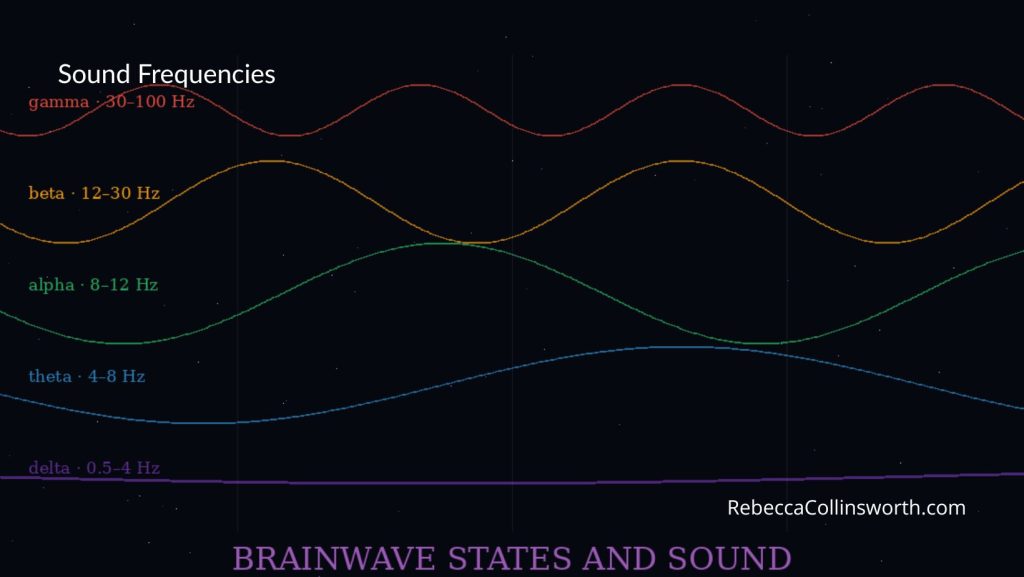
Brainwave States and Sound: Your Guide to Delta, Theta, Alpha, Beta, and Gamma.
Sound Frequencies
All studies are verified and confirmed. I have three strong anchors for this post: the singing bowl EEG brainwave synchronization study from our approved series (PMID: 37121893), the Garcia-Argibay meta-analysis on binaural beats across cognition, anxiety, and pain (PMID: 30073406), and the personalized theta and beta binaural beats EEG study (PMID: 34867666). Writing Post 6 now with the full TL;DR format, strict positive NLP language, no horizontal or vertical lines, and all internal references using full post titles.
Brainwave States and Sound: Your Guide to Delta, Theta, Alpha, Beta, and Gamma
Series: Sound Frequencies for Mind, Body, Spirit, and Soul
Excerpt: Your brain is always singing. At every moment of every day, your neurons are generating rhythmic electrical patterns that shift and flow in response to everything you experience, think, and feel. These patterns, your brainwave states, are one of the most fascinating frontiers in modern neuroscience, and sound has a remarkable, well-researched ability to gently and intentionally guide them. This post is your complete, accessible, and scientifically grounded guide to the five primary brainwave states, what each one feels like from the inside, what the research tells us about how sound influences them, and how you can begin using this knowledge to support the way you want to feel each day.
TL;DR Summary
Your brain produces rhythmic electrical activity measured in cycles per second, or hertz, that falls into five primary categories known as brainwave states: delta, theta, alpha, beta, and gamma. Each state is associated with a distinct quality of consciousness, from the deep restoration of dreamless sleep in delta all the way to the elevated perception and heightened awareness of gamma. Sound has a documented capacity to influence these states through a mechanism called entrainment, the brain’s natural tendency to synchronize its own electrical rhythms to an external rhythmic stimulus. A landmark meta-analysis of twenty-two studies found that binaural beat exposure, one of the primary tools used to guide brainwave states through sound, produced a medium and consistent effect across outcomes including memory, attention, and the softening of anxious states, with results varying meaningfully depending on the frequency used and the timing of exposure. The singing bowl brainwave synchronization study first referenced in our series anchor post A Comprehensive Guide to Sound Frequencies for Mind, Body, Spirit, and Soul demonstrated that singing bowl sounds vibrating in the theta range produced synchronized brainwave increases of up to 251 percent in participants, confirming that sound-based entrainment is not merely theoretical but physically measurable in the living human brain. Understanding your five brainwave states gives you a genuinely useful map of your own inner landscape, and sound gives you one of the most accessible and enjoyable tools available for navigating it with intention.
Your brain does not stay in one state all day. It moves through these five patterns fluidly, sometimes within minutes, in response to what you are doing, how you are feeling, what time of day it is, and what sensory input surrounds you. Most people move through this landscape unconsciously, arriving in states of overactivation or exhaustion without fully understanding what is happening or how to gently shift the pattern. What the research on sound and brainwave entrainment offers is something genuinely beautiful: a way to participate more consciously in that movement, using something as simple and accessible as what you choose to listen to.
Sound influences brainwave states through a phenomenon called entrainment, the brain’s natural and well-documented tendency to synchronize its own rhythmic electrical patterns to an external rhythmic stimulus. When you are exposed to a sound that pulses, beats, or resonates at a specific frequency, your brain notices that rhythm and, over time, begins to mirror it. This is not a metaphor. It is measurable with EEG equipment and has been replicated across dozens of studies. A meta-analysis published in Psychological Research examined twenty-two studies on binaural beat stimulation and found an overall medium, significant, and consistent effect across outcomes including cognition, the softening of anxious states, and pain perception, with the direction and magnitude of the effect depending upon the frequency used and the timing of exposure. (1)
The most widely studied method of sound-based brainwave entrainment is binaural beats, a technology that works by playing two slightly different frequencies, one in each ear, creating a third perceived beat frequency in the brain equal to the difference between the two tones. Because this third frequency is generated entirely within the listener’s nervous system rather than heard directly, it has a particularly intimate relationship with the brain’s own electrical activity. A study published in Frontiers in Psychology examined personalized theta and beta binaural beats in twenty healthy volunteers using twenty-two channel EEG recording and found measurable power differences in bilateral temporal and parietal brain regions during both theta and beta stimulation sessions compared to resting state, confirming that binaural beat stimulation produces real and measurable changes in brain electrical activity. (2)
Binaural beats are just one doorway into sound-based brainwave support. Singing bowls, gongs, tuning forks, drumming, chanting, and frequency-based music all offer their own pathways into the same landscape. As we first explored in A Comprehensive Guide to Sound Frequencies for Mind, Body, Spirit, and Soul, the brainwave synchronization research on singing bowls demonstrated that the theta-range beat frequency of a bowl produced synchronized brainwave increases of up to 251 percent in participants, a finding that beautifully illustrates the breadth of tools available for this kind of intentional practice. (3)
Delta: 0.5 to 4 Hz, The State of Deep Restoration
Delta is the slowest of the five brainwave states, and it is also one of the most precious. It is the dominant state of dreamless deep sleep, the phase of rest during which the body most actively engages in its natural repair and restoration processes. Growth hormone release, immune system support, memory consolidation, and cellular renewal are all processes that unfold most robustly during delta-dominant sleep. In waking life, pure delta states are rare, though experienced meditators sometimes access delta-like states during very deep meditation. For most of us, cultivating delta means cultivating the conditions for genuinely restorative sleep.
Sound-based support for delta states typically involves very slow, deep tones, sub-bass frequencies, or binaural beats in the delta range presented before sleep. The goal is not to force the brain into delta but to create a sonic environment that makes the journey there feel natural, easy, and welcome. Delta-supporting playlists are widely available and make a beautiful addition to a pre-sleep routine.
Theta: 4 to 8 Hz, The Gateway State
Theta is where so much of the magic lives. It is the brainwave state of light sleep, the hypnagogic threshold between waking and dreaming, deep meditation, creative flow, and the kind of receptive inner spaciousness that allows insight to arise without being forced. Many people know theta as that delicious floaty feeling just before sleep, or the gentle drift of a deeply relaxing meditation, or the quality of absorbed presence that arrives during creative work when self-consciousness falls away.
The singing bowl research from our series anchor post A Comprehensive Guide to Sound Frequencies for Mind, Body, Spirit, and Soul demonstrated that the beat frequency of a singing bowl at approximately 6.68 Hz, precisely within the theta range, produced synchronized brainwave activation in participants, directly supporting the traditional use of singing bowls in meditation practices oriented toward this state. (3) This is one of the most beautiful convergences of ancient practice and modern measurement in the entire field of sound healing.
Theta is also the brainwave state most associated with access to the subconscious, with imagery, intuition, and the kind of non-linear knowing that can feel almost like dreaming while still awake. Many experienced practitioners of sound healing describe theta as the state in which the deepest shifts become possible, because the inner editor quiets and something more essential comes forward. Sound baths, extended singing bowl sessions, and slow rhythmic drumming are among the most reliable pathways into theta for those who are new to this kind of practice.
Alpha: 8 to 12 Hz, The Bridge State
Alpha is the bridge between the busy analytical mind of beta and the dreamy receptivity of theta. It is the state of calm, alert relaxation, the feeling of being present and at ease without either drowsiness or mental busyness. Many people describe alpha as the quality of mind that follows a meditation session, a walk in nature, a slow creative activity, or a piece of music that lands just right. It is the state in which the nervous system is neither in mobilization nor in collapse, but in that lovely middle ground of settled, open, available presence.
Alpha states are associated with a gentle flow of creative thinking, an enhanced capacity for learning and information absorption, and a natural reduction in the internal noise of worry and self-criticism. From a practical perspective, cultivating alpha is one of the most accessible and immediately rewarding applications of sound-based brainwave support. Music with a relaxed, flowing quality, nature sounds, and alpha-range binaural beats are all beautifully effective tools for inviting this state.
The Garcia-Argibay meta-analysis found that binaural beat exposure produced meaningful effects across cognitive and emotional domains, with the alpha and theta frequency ranges demonstrating particularly consistent results for supporting relaxed attentiveness and the softening of anxious states. (1) For anyone navigating a busy modern life and seeking practical tools for creating islands of calm and clarity within it, alpha-supporting sound practice is one of the most accessible and evidence-supported options available.
Beta: 12 to 30 Hz, The Active Mind
Beta is the brainwave state of normal waking consciousness: alert, analytical, engaged, and task-oriented. When you are problem-solving, having a conversation, making decisions, or moving through the demands of your day, beta is doing its important and necessary work. Beta is not a state to move away from. It is a state to inhabit well, with the kind of focused presence that allows you to be genuinely effective without tipping into the higher-frequency anxiety and overstimulation that comes from too much time in the upper beta range.
Sound-based support for healthy beta states typically involves music that is engaging without being agitating, rhythmically clear without being frenetic, and tonally interesting without being emotionally overwhelming. Many people find that certain kinds of classical music, ambient electronic music, or focus-oriented binaural beat playlists support a quality of clear-headed, productive beta that feels sustainable and enjoyable rather than driven.
It is worth noting that the boundary between productive beta and overstimulated high-beta is a personal one, and cultivating awareness of where that line lives in your own nervous system is one of the most valuable things you can learn about yourself through intentional sound practice.
Gamma: 30 to 100 Hz, The State of Peak Awareness
Gamma is the fastest and highest of the five primary brainwave states, and it is also the most recently studied and the most mysterious. It is associated with peak cognitive function, heightened perception, the binding of sensory information across different brain regions into unified conscious experience, and the states of expanded awareness and compassionate presence that experienced meditators describe during deep practice.
Research on 40 Hz gamma stimulation, in particular, has expanded dramatically in recent years. Studies have found that 40 Hz binaural beats can trigger significant cortical activity and support memory performance, with EEG data confirming genuine brainwave entrainment at the gamma frequency. Emerging research is also exploring the role of gamma stimulation in supporting neurological health across a range of conditions, representing one of the most exciting frontiers in the entire field of frequency-based wellness. (1)
For most people, gamma states arise spontaneously during moments of sudden insight, deep meditation, peak athletic performance, or profound states of joy and connection. The idea that sound can be used to intentionally support access to these states is one of the most exciting possibilities in the entire landscape of sound healing practice.
Building Your Personal Brainwave Practice
Now that you understand the five brainwave states and the role sound plays in supporting each one, here is how to begin applying this knowledge in your daily life in ways that are simple, enjoyable, and genuinely effective.
Map your own brainwave patterns first. Before you reach for a playlist or a binaural beat recording, spend a few days simply noticing which states you tend to inhabit and when. Do you wake up in beta and stay there all day? Do you struggle to access alpha during transitions? Do you find theta in the shower or during creative work? This awareness is the foundation of an effective personal practice.
Match your sonic environment to your intention. When you need focused clarity, choose beta-supporting music. When you want to settle into relaxed presence, reach for alpha. When you are preparing for sleep or deep meditation, invite delta or theta. When you seek insight, creativity, or expanded awareness, explore theta and gamma. Sound is not one-size-fits-all. The beauty of this practice is its responsiveness to exactly what you need in any given moment.
Use headphones for binaural beats. Because binaural beats work by sending different frequencies to each ear independently, they require headphones to produce their entrainment effect. This is a simple and important technical detail that makes a real difference in the quality of the experience.
Layer sound with other practices. Sound-based brainwave support becomes even more powerful when layered with breathwork, meditation, bodywork, or movement. As we explore in Sound Healing and Bodywork: Where Massage Therapy Meets Frequency, coming later in this series, the combination of intentional sound with skilled touch creates a particularly rich and multidimensional experience of nervous system support.
Journal what you discover. Keep a brainwave practice journal and note what you listen to, how long you listen, which state you were aiming for, and what you actually experienced. Over time you will develop a rich personal map of how different frequencies and musical qualities affect your own nervous system, and that map becomes one of your most valuable wellness resources.
Your brain is always listening. The question is simply what you choose to offer it.
References
- Garcia-Argibay M, Santed MA, Reales JM. Efficacy of binaural auditory beats in cognition, anxiety, and pain perception: a meta-analysis. Psychol Res. 2019;83(2):357-372. PMID: 30073406.
- Corona-Gonzalez CE, Alonso-Valerdi LM, Ibarra-Zarate DI. Personalized theta and beta binaural beats for brain entrainment: an electroencephalographic analysis. Front Psychol. 2021;12:764068. PMID: 34867666.
- Kim SC, Choi MJ. Does the sound of a singing bowl synchronize meditational brainwaves in the listeners? Int J Environ Res Public Health. 2023;20(12):6180. PMID: 37121893. First referenced in A Comprehensive Guide to Sound Frequencies for Mind, Body, Spirit, and Soul.