The Solfeggio Frequencies: Origins, History, and How to Use Them
Sound Frequencies

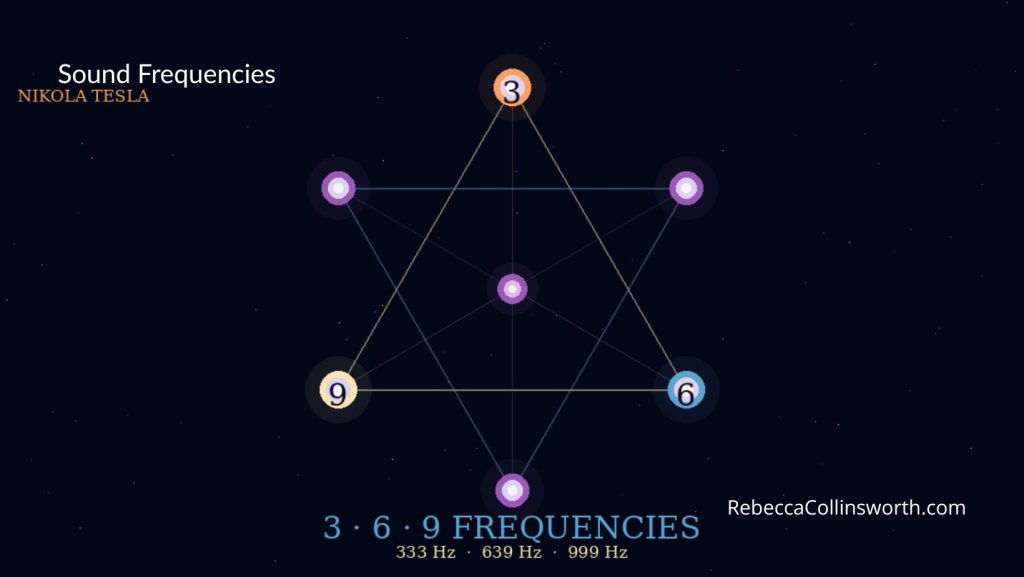
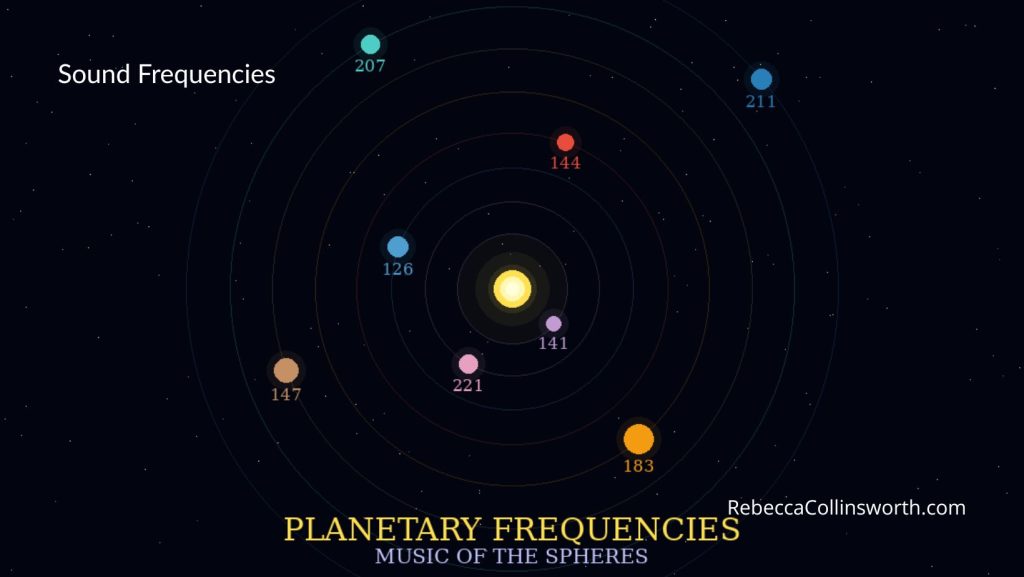
There is something quietly extraordinary about the idea that tones sung by monks in a medieval monastery more than a thousand years ago might be the same frequencies now showing up in peer-reviewed research on brainwave states, cortisol levels, and endocrine responses. The Solfeggio frequencies carry one of the richest and most layered histories in all of sound healing, woven from threads of sacred music, mathematical philosophy, spiritual tradition, and emerging science. Whether you are drawn to them through curiosity, through spiritual seeking, or through the simple experience of listening and noticing how your body responds, this post is your complete guide to where they came from, what each tone is traditionally believed to invite, and how you can begin weaving them meaningfully into your everyday wellness life. As we laid the scientific foundation in The Science of Sound as Medicine and The Medical Proof of Concept explored in Lithotripsy and the Medical Proof of Concept, you arrive here already knowing that sound is not passive. Now let us discover the tones that have been calling people home to themselves for centuries.
A Monk, a Hymn, and the Birth of a Scale
To understand the Solfeggio frequencies, we travel back to eleventh century Italy, to a Benedictine monk named Guido of Arezzo. Guido was a music theorist and teacher with a gift for making the complex beautifully simple. Faced with the challenge of helping monastery choirs learn and remember sacred melodies, he developed a revolutionary system of musical notation that would shape Western music for the next thousand years.
His system was built on the opening syllables of each line of a Latin hymn called Ut Queant Laxis, written in honor of Saint John the Baptist. Those syllables, Ut, Re, Mi, Fa, Sol, La, became the foundation of what we now call solfege, the do-re-mi system that anyone who has ever sung in a choir or sat through a music lesson will immediately recognize. What Guido could not have anticipated is that the specific tones associated with those syllables would one day be identified as carrying their own vibrational signatures, and that those signatures would become one of the most widely explored frequency sets in the entire world of sound healing.
The six original tones that Guido mapped, later extended to nine by modern researchers, form the core of what we now call the Solfeggio scale. The word Solfeggio itself is simply an Italian form of the original solfege system, the name evolving as the tradition traveled through centuries and cultures.
Lost, Found, and Carried Forward
After their prominent role in sacred music through the medieval period, the Solfeggio tones gradually faded from common use as Western music evolved toward the standardized tuning system we use today, a system based on equal temperament that prioritizes mathematical convenience across all keys over the pure resonance of any individual tone. Many researchers and practitioners in the sound healing world believe that this shift represented a meaningful departure from frequencies that had been intentionally chosen for their vibrational qualities.
The modern rediscovery of the Solfeggio frequencies is most closely associated with Dr. Joseph Puleo, a physician and researcher who, working in the 1970s, identified a pattern of repeating numerical codes in ancient texts that he believed corresponded to a set of specific healing frequencies. His work brought the original six tones back into awareness and ignited a growing conversation about their therapeutic potential. Dr. Leonard Horowitz later expanded the scale to include three additional frequencies, bringing the set to the nine-tone scale that most sound healing practitioners work with today.
It is worth holding this history with both openness and discernment. The direct historical link between the specific Hz values we work with today and the tones sung in medieval monasteries is more a matter of inspired interpretation than documented fact. What is genuinely ancient is the practice of using intentional vocal tones and sacred music for healing and spiritual transformation. The Solfeggio frequencies, as we know them today, represent a beautiful modern synthesis of that ancient wisdom, mathematical philosophy, and the lived experience of countless practitioners who have worked with these tones and found them meaningful.
What the Research Is Telling Us
While peer-reviewed research specifically on individual Solfeggio frequencies is still in its early and growing stages, the broader science of how specific musical frequencies affect the human body continues to develop in genuinely exciting ways.
A study published in PLOS One examined the effects of listening to relaxing music on the human stress response across endocrine, autonomic, and psychological domains. Researchers found that music listening meaningfully influenced the body’s psychobiological stress system, with participants who listened to music showing notably faster recovery of autonomic nervous system markers following a stressor compared to those in silence. (1) This tells us that the quality and frequency characteristics of what we listen to have measurable effects on how our bodies move through and recover from states of activation, a finding that resonates beautifully with the intentions behind Solfeggio frequency practice.
The solfeggio-frequency music study explored in our series anchor post A Comprehensive Guide to Sound Frequencies for Mind, Body, Spirit, and Soul found that exposure to solfeggio-frequency music reversed both cognitive and endocrine stress markers in subjects experiencing circadian disruption, pointing toward a meaningful relationship between these specific tonal frequencies and the body’s hormonal and cognitive responses. (2)
And as the ancient sound healing review first referenced in A Comprehensive Guide to Sound Frequencies for Mind, Body, Spirit, and Soul affirmed, there is a growing body of evidence supporting the role of intentional sound-based practices in supporting the kind of ease, restoration, and inner spaciousness that the Solfeggio tradition has always aspired to cultivate. (3)
A Guide to All Nine Solfeggio Tones
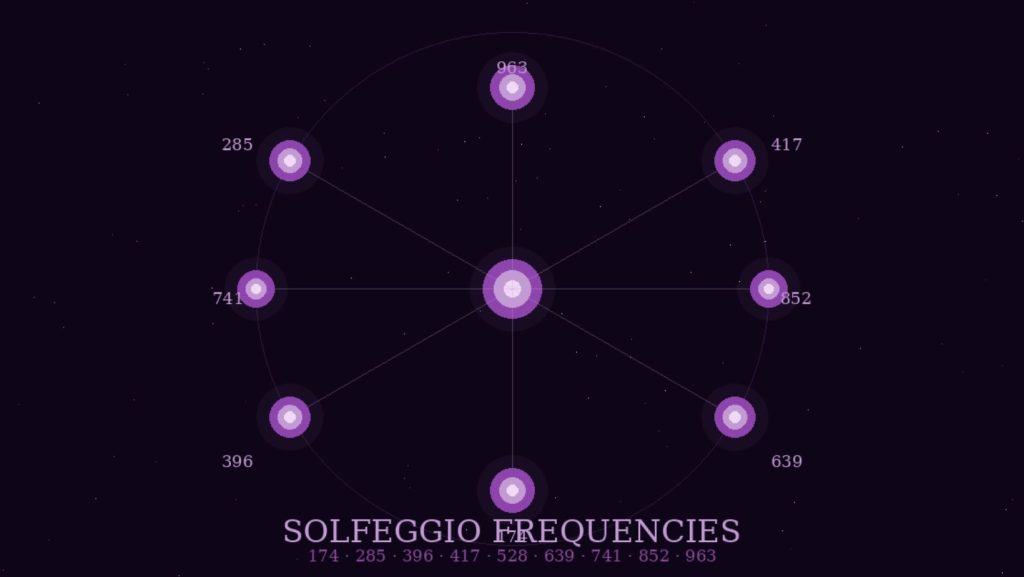
Here is your complete, living reference for the nine Solfeggio frequencies, their traditional wellness associations, the quality of experience each tone is believed to invite, and practical suggestions for how to begin working with each one.
174 Hz: The Foundation Tone
This is the deepest and most grounding of the Solfeggio frequencies, believed in many healing traditions to resonate with the foundational layers of physical and energetic experience. Practitioners often describe working with 174 Hz as a felt sense of being rooted, safe, and held. It is a wonderful tone to begin with if you are new to frequency work, or to return to on days when life feels scattered or overwhelming. Simply lie down, close your eyes, and let the low resonance of this tone move through you like a warm hand placed gently on the ground of your being. Suggested BPM for music pairing: 60 to 80.
285 Hz: The Restoration Tone
Described across healing traditions as having a gentle, nurturing quality, 285 Hz is associated with the body’s natural capacity for renewal and energetic balance. Many practitioners use this frequency during rest, recovery, or periods of transition, inviting the body’s own intelligence to do what it already knows how to do beautifully. Suggested BPM for music pairing: 60 to 90.
396 Hz: The Liberation Tone, Root Chakra
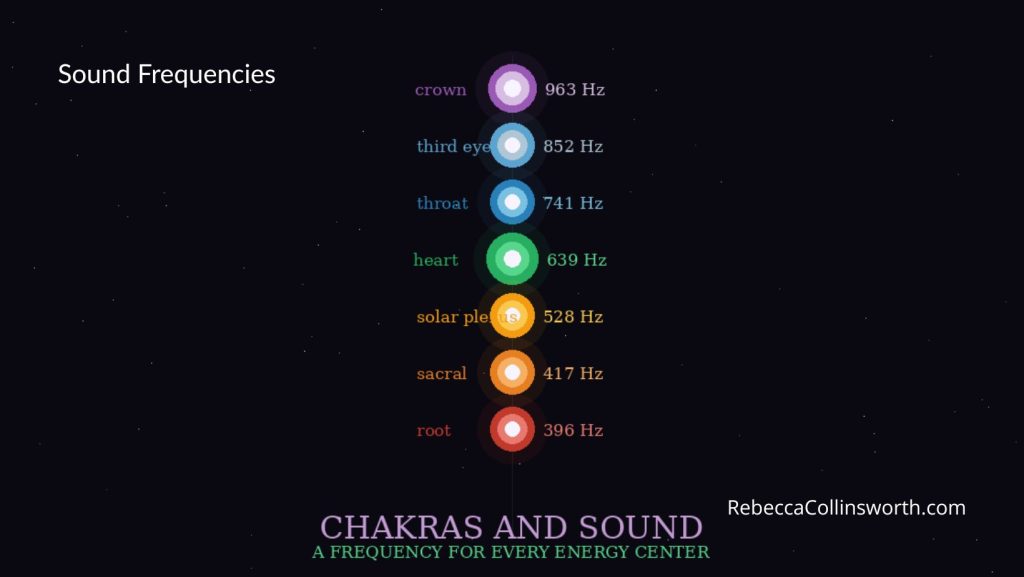
Associated with the root chakra and the element of earth, 396 Hz is traditionally linked with the gentle release of fear, guilt, and the energetic weight of experiences that have kept us feeling small or contracted. Working with this tone is often described as an invitation to put down what is no longer yours to carry, and to feel the spacious relief of your own natural ground. Suggested BPM for music pairing: 80 to 109.
417 Hz: The Renewal Tone, Sacral Chakra
Associated with the sacral chakra and the element of water, 417 Hz is believed to support positive change, creative flow, and the graceful release of old patterns that no longer reflect who you are becoming. If you are standing at a threshold in your life, this is a beautiful frequency to sit with. Let it move through you the way water moves, finding its own path forward. Suggested BPM for music pairing: 80 to 100.
528 Hz: The Love Frequency, Solar Plexus Chakra
Perhaps the most widely known and researched of all the Solfeggio tones, 528 Hz has captured the imagination of scientists, sound healers, and spiritual seekers alike. Associated with the solar plexus chakra, it is sometimes called the love frequency or the miracle tone. Practitioners describe working with 528 Hz as a felt sense of warmth, coherence, and heart-centered presence. Research has explored its potential influence on endocrine and autonomic nervous system responses, and it remains one of the most actively studied tones in the solfeggio family. This frequency deserves its own full exploration, which is exactly what we offer in Deep Dive into the Love Frequency: 528 Hz, coming soon in this series. Suggested BPM for music pairing: 60 to 80.
639 Hz: The Connection Tone, Heart Chakra
Associated with the heart chakra and the element of air, 639 Hz is the frequency of relationship, communication, and the quality of loving understanding that makes genuine connection possible. Practitioners work with this tone to support the softening of relational tension, the cultivation of compassion for self and others, and the remembrance that we are always, at our deepest level, in relationship with life itself. Suggested BPM for music pairing: 70 to 90.
741 Hz: The Clarity Tone, Throat Chakra
Associated with the throat chakra and the gift of authentic expression, 741 Hz is believed to support mental clarity, creative problem-solving, and the courage to speak from your truest self. Many practitioners use this frequency during creative work, journaling, or any time they feel the need to find their voice again after a period of contraction or doubt. Suggested BPM for music pairing: 90 to 110.
852 Hz: The Intuition Tone, Third Eye Chakra
Associated with the third eye chakra and the deep inner knowing that lives beneath the noise of everyday thinking, 852 Hz is a frequency many practitioners return to during meditation, contemplation, or times when clarity feels just out of reach. Working with this tone is often described as a gentle clearing of the inner lens, an invitation to trust what you already, at some level, sense to be true. Suggested BPM for music pairing: 60 to 80.
963 Hz: The Unity Tone, Crown Chakra
The highest of the original nine Solfeggio tones, 963 Hz is associated with the crown chakra and the experience of spiritual connection, oneness, and the felt sense of belonging to something beautifully larger than the individual self. Many practitioners use this frequency in deep meditation or prayer, as a tonal doorway into states of expanded awareness and inner peace. Suggested BPM for music pairing: 50 to 70.
How to Begin Your Solfeggio Practice
You do not need special equipment, a dedicated studio, or any prior experience with sound healing to begin exploring the Solfeggio frequencies in your own life. Here are four beautifully simple ways to start.
Listen with intention. Search any of the nine frequencies on a streaming platform or video site and set aside fifteen to twenty minutes for undistracted listening. Use headphones when possible, find a comfortable position, and simply notice what arises in your body, your breath, and your inner landscape as you listen.
Follow your body. Rather than working through the frequencies in order, let yourself be drawn toward whichever tone feels most resonant right now. Your body is an exquisitely intelligent guide, and what calls to you in this moment is always worth exploring.
Layer with your existing practice. If you already meditate, practice yoga, receive massage, or engage in any other form of intentional self-care, try adding a Solfeggio frequency playlist as your sonic environment. Many people find that the combination deepens and extends the benefits of whatever they are already doing.
Journal your experience. Before and after each listening session, take a few moments to write freely. Where do you feel this frequency in your body? What does it seem to be inviting? What shifts, however subtly, after you spend time with a particular tone? Over weeks and months, your journal becomes a rich personal map of your own frequency landscape.
Your Invitation
The Solfeggio frequencies are not a system to master or a protocol to follow. They are an invitation, a tonal doorway into a more intimate relationship with the vibrational intelligence your body already carries. Every time you choose to listen with intention, you are participating in a tradition that stretches back through centuries of human beings seeking, through sound, to come home to themselves.
We would love to know which Solfeggio tone resonates most deeply with you right now. Leave a comment below, send a message, or share your experience with someone whose curiosity might be sparked by yours. And stay with us as we go even deeper in Deep Dive into the Love Frequency: 528 Hz, coming next in this series.
References
- Thoma MV, La Marca R, Bronnimann R, Finkel L, Ehlert U, Nater UM. The effect of music on the human stress response. PLoS One. 2013;8(8):e70156. PMID: 23940541.
- Dos Santos AC, de Abreu MS, de Mello GP, et al. Solfeggio-frequency music exposure reverses cognitive and endocrine deficits evoked by a 24-h light exposure in adult zebrafish. Behav Brain Res. 2023;450:114461. PMID: 37119977. First referenced in A Comprehensive Guide to Sound Frequencies for Mind, Body, Spirit, and Soul.
- Goldsby TL, Goldsby ME. Eastern integrative medicine and ancient sound healing treatments for stress: recent research advances. Altern Ther Health Med. 2020;26(S1):24-30. PMID: 33488307. First referenced in A Comprehensive Guide to Sound Frequencies for Mind, Body, Spirit, and Soul.