
The Science of Sound as Medicine
Sound Frequencies
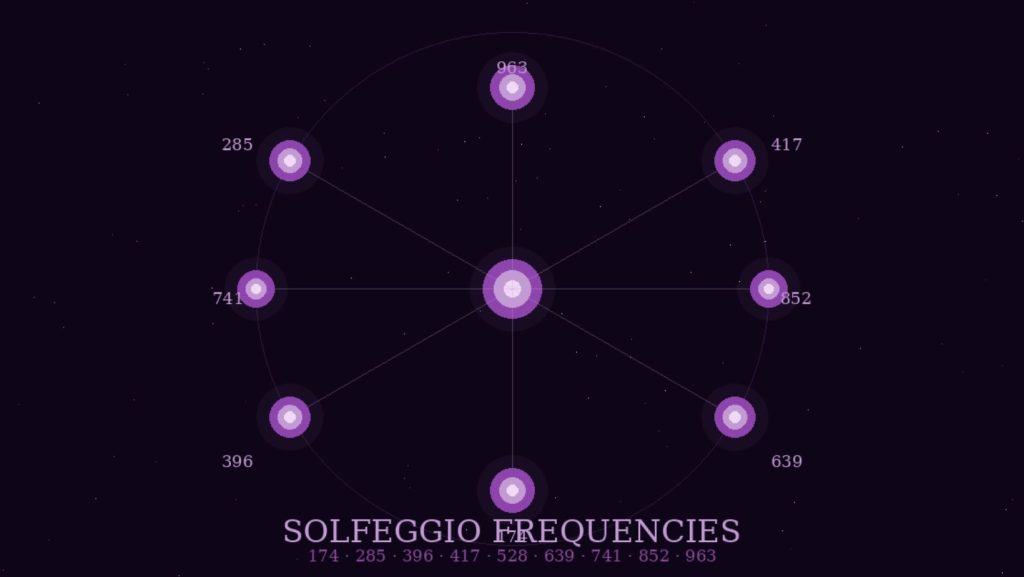
Sound vibration is not simply something you hear. It is a mechanical force that interacts with every layer of your physical body through three well-documented biological pathways: hemodynamic, neurological, and musculoskeletal. Research published in peer-reviewed journals has mapped these mechanisms in detail, revealing that low-frequency sound can influence blood flow, nerve activity, brainwave states, muscle response, and even bone tissue behavior. Two compelling real-world demonstrations bookend the science beautifully: cymatics, the study of how sound frequency creates visible geometric patterns in matter, and lithotripsy, the FDA-cleared medical procedure that uses focused sound waves to shatter kidney stones inside the living human body without a single incision. Together they establish something important: sound is not passive. It is biologically active, physically powerful, and increasingly well understood. This post lays the scientific foundation for every topic explored throughout this series.
Welcome Back to Sound Frequencies Series
If you are joining us from our opening post, A Comprehensive Guide to Sound Frequencies for Mind, Body, Spirit, and Soul, welcome back. If this is your first stop in the series, you are in exactly the right place to begin. This post builds the scientific foundation that every subsequent post in this series will rest on, so even if science is not usually your favorite reading, we are going to make it approachable, interesting, and genuinely illuminating.
Here is the central question this post answers: how does sound actually affect the body? Not in a vague, energetic sense, but physically and measurably. What happens inside your cells, your nervous system, your blood vessels, and your muscles when sound vibration moves through you? The answer is more specific, more grounded, and more surprising than most people expect.
Sound Is a Physical Force
Before we talk about healing frequencies, chakras, or meditation, we need to establish something fundamental. Sound is not an idea. It is not a metaphor. It is a mechanical pressure wave, a physical disturbance that moves through matter by pushing and pulling the molecules it encounters. When you hear music, it is because sound waves have physically moved through the air and vibrated your eardrum. When you feel a bass note in your chest at a concert, it is because those same pressure waves have moved through your body tissue.
This matters because it means that every time you are exposed to sound, your body is not just processing an auditory signal. It is responding to a physical force. And depending on the frequency, intensity, and duration of that force, the response can be remarkably specific and measurable.
This is the premise that the entire field of vibrational medicine rests on. And as we are about to see, it is well supported by research.
The Three Biological Pathways of Sound
A landmark 2021 narrative review published in the journal Healthcare, authored by researchers at the University of Toronto and Baycrest Health Sciences Centre, mapped what scientists have discovered about how sound vibration affects the human body. The paper, which is referenced in our series anchor post and serves as a primary foundation for this series, identified three primary biological pathways through which vibration produces its effects. (1)
These three pathways are hemodynamic, neurological, and musculoskeletal. Understanding them gives you a genuinely useful framework for understanding why sound healing works the way it does.
Pathway One: Hemodynamic Effects
The hemodynamic pathway refers to the effects of sound vibration on blood flow and circulation. When low-frequency sound vibration is applied to the body, it stimulates the endothelial cells that line the interior of blood vessels. These cells play a central role in regulating vascular tone, which is essentially how open or constricted your blood vessels are at any given moment.
Research included in the Healthcare review found that vibration applied to the body can produce measurable changes in local circulation, supporting blood flow in ways that may contribute to the warmth and physical ease that many people report during sound healing sessions and vibroacoustic therapy. A related mechanism called vibropercussion describes how rhythmic vibrational input can also influence the movement of fluid through tissue, which has implications for lymphatic circulation and the kind of tissue softening that bodywork practitioners observe in their practice.
For clients who come to massage therapy and wellness sessions already carrying the physical weight of chronic tension and reduced circulation, this hemodynamic pathway offers a scientifically grounded explanation for why adding sound to a bodywork environment can deepen and extend the physical benefits of the session.
Pathway Two: Neurological Effects
The neurological pathway is perhaps the most layered and fascinating of the three. Sound vibration affects the nervous system through several distinct mechanisms, each of which the Healthcare review examined in detail.
The first is protein kinase activation. Protein kinases are enzymes that play a central role in cellular signaling, essentially acting as molecular switches that turn biological processes on and off. Research has shown that mechanical vibration can activate specific protein kinases in nerve cells, which may help explain how sound vibration influences the nervous system at a cellular level.
The second neurological mechanism is direct nerve stimulation. Low-frequency vibration is detected by specialized sensory receptors in the skin and deeper tissues, particularly Pacinian corpuscles, which are exquisitely sensitive to vibration. When these receptors fire, they send signals through the sensory nervous system that can influence pain perception, arousal states, and the balance between the sympathetic and parasympathetic branches of the autonomic nervous system.
This last point connects to a concept called vibratory analgesia, the well-documented phenomenon by which vibration applied to the body can reduce the perception of pain. The mechanism is related to the gate control theory of pain, which holds that non-painful sensory input can effectively close the gate to pain signals traveling toward the brain. This is part of why the gentle pressure and vibration of massage therapy can provide such meaningful relief.
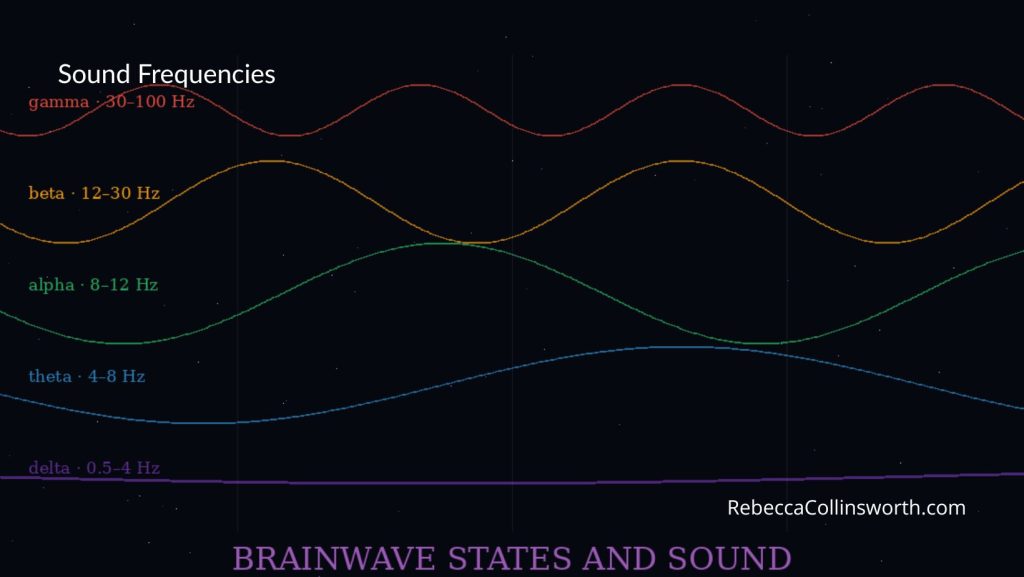
The third neurological mechanism is oscillatory coherence. This is where the science begins to sound almost poetic. Oscillatory coherence refers to the synchronization of rhythmic electrical activity across different regions of the brain and nervous system. When the brain is exposed to a rhythmic external stimulus, whether through sound, music, or vibration, it has a demonstrated tendency to synchronize its own electrical patterns to that rhythm. This is called entrainment, and it is one of the most well-supported mechanisms in the entire field of sound healing research. The singing bowl brainwave synchronization study referenced in our opening post demonstrated exactly this effect, with participants showing brainwave increases of up to 251 percent at the frequency of the bowl they were listening to, as first explored in our series anchor post.
A 2024 study published in Sensors examined the effects of vibroacoustic sound massage on psychological, physiological, and cognitive stress markers. Using both electrocardiogram and electroencephalogram measurements, researchers found that the vibroacoustic intervention increased parasympathetic nervous system activity across all participants, while EEG results indicated increased concentration, reduced arousal, and increased relaxation. (2) In plain language: the sound massage measurably shifted the nervous system from a stress state toward a recovery state, and the brain became calmer and more focused at the same time.
Pathway Three: Musculoskeletal Effects
The third pathway covers the effects of sound vibration on the muscles, connective tissue, and skeletal system. This is perhaps the most surprising of the three for many readers, because it reveals that sound does not just influence how we feel emotionally or neurologically. It can physically affect the structural tissues of the body.
The Healthcare review identified several specific musculoskeletal mechanisms. The muscle stretch reflex describes how vibration applied to a muscle can trigger the same reflex response as physical stretching, which has implications for muscle tone, flexibility, and the release of habitual tension patterns. Research on bone cell progenitor fate, which sounds technical but is genuinely fascinating, has shown that vibration can influence the behavior of stem cells in bone tissue, affecting whether they develop into bone-forming or fat-storing cells. Additional research cited in the review examined the effects of vibration on bone ossification, bone resorption, and the health of intervertebral discs in the spine.
For clients working with a massage therapist or health coach to support musculoskeletal wellbeing, this pathway suggests that sound is not simply a pleasant background experience during a session. It may be a biologically active component of the work itself.
Cymatics: Sound Made Visible
One of the most visually striking demonstrations of sound’s physical power is the field of cymatics, the scientific study of how sound frequency creates visible patterns in matter. The term was coined by Swiss physician Hans Jenny in the 1960s, who documented in meticulous detail what happens when you place fine powder or liquid on a surface and expose it to specific sound frequencies.
The patterns that emerge are breathtaking. At low frequencies, simple geometric shapes appear. As the frequency increases, the patterns become progressively more complex, intricate, and symmetrical, forming mandalas, spirals, lattices, and structures that closely resemble forms found throughout nature, from snowflakes and cellular membranes to the arrangement of seeds in a sunflower.
A paper published in PMC examining sound matrix shaping of living matter described how cymatics demonstrates that sound waves have an intrinsic order in which they manifest, and when crossing matter, they arrange it into ordered shapes and geometric structures of considerable complexity. The researchers further noted that this order is reproduced within living organisms, suggesting that the organizing potential of sound may be relevant not just to sand on a plate but to the biological structures that make up our bodies. (3)
This is not a claim that specific frequencies will reorganize your cells into healing geometries. It is an observation that sound physically shapes matter in ways we can see with our own eyes, and that the human body, which is largely composed of water and is exquisitely sensitive to vibration, is not exempt from this physical reality. It is an invitation to remain curious about what we do not yet fully understand.
Lithotripsy: When Medicine Proved the Point
If cymatics gives us the visual proof that sound shapes matter, lithotripsy gives us the medical proof that sound can physically alter matter inside a living human body. As introduced in our series anchor post, extracorporeal shock wave lithotripsy is an FDA-cleared, hospital-based procedure that uses precisely focused sound waves to break apart kidney stones without surgery, anesthesia, or a single incision.
This is worth sitting with for a moment. A solid mass of crystallized mineral, hard enough to cause excruciating pain as it moves through the urinary tract, can be shattered into passable fragments by sound waves delivered from outside the body. The waves travel through skin, muscle, and fluid without damaging those tissues, and then concentrate their energy precisely at the target.
A newer variation called Burst Wave Lithotripsy uses short harmonic bursts of ultrasound at lower pressure levels, fragmenting stones within minutes with negligible surrounding tissue injury. Both procedures are grounded in the same fundamental physics that underlies all of sound healing: the principle that specific frequencies, applied with intention and precision, produce specific physical effects in living tissue.
You do not have to believe in chakras or solfeggio frequencies to find this remarkable. The fact that medicine has quietly been using sound to physically alter the human body for decades, and that this is now routine hospital care, is one of the most compelling arguments for taking the broader field of therapeutic frequency seriously.
What This Means for Your Wellness Practice
Understanding these three biological pathways and the physical reality of sound’s effects opens up a genuinely practical set of possibilities for your daily wellness life. Sound is not something that happens to you passively. It is something you can engage with intentionally.
When you listen to frequency-based music during rest, you are supporting your nervous system’s capacity for entrainment and oscillatory coherence. When you participate in a sound bath or vibroacoustic session, you are engaging the hemodynamic, neurological, and musculoskeletal pathways simultaneously. When you pair intentional listening with bodywork, breathwork, or meditation, you are layering complementary inputs that may deepen and extend the benefits of each practice.
None of this requires that you accept any metaphysical claim about healing or transformation. The biology is sufficient on its own to make a compelling case for engaging with sound more intentionally. And if you are drawn to the spiritual and traditional dimensions of frequency work as well, the science provides a respectful and well-grounded companion to that exploration.
The field is young. The questions are rich. And the research is genuinely exciting.
What Comes Next
In Lithotripsy and the Medical Proof of Concept, we go deep into the medical story of lithotripsy itself: its history, how it works, what the newer burst wave technology means, and why this one procedure changes the entire conversation about therapeutic sound. It is one of the most fascinating and reader-friendly posts in the series, and you do not need a science background to love it.
If you are just arriving at this series, we warmly invite you to begin with the anchor post, A Comprehensive Guide to Sound Frequencies for Mind, Body, Spirit, and Soul, which is the foundation for everything we are exploring together.
Have a question about the science covered in this post? Something that surprised you or sparked your curiosity? Leave a comment below or send a message. This conversation is always better when we explore it together.
References
- Bartel L, Mosabbir A. Possible mechanisms for the effects of sound vibration on human health. Healthcare. 2021;9(5):597. PMID: 34069792. First referenced in the series anchor post.
- Fooks C, Niebuhr O. Effects of vibroacoustic stimulation on psychological, physiological, and cognitive stress. Sensors (Basel). 2024;24(18):5924. PMID: 39338668.
- Benfatto MN, Bhatt M, Bhatt D, et al. Sound matrix shaping of living matter: from macrosystems to cell microenvironment, where mitochondria act as energy portals in detecting and processing sound vibrations. PMC. 2024. PMC11241420.