Tibetan Singing Bowls: Ancient Tradition Meets Modern Research
Sound Frequencies


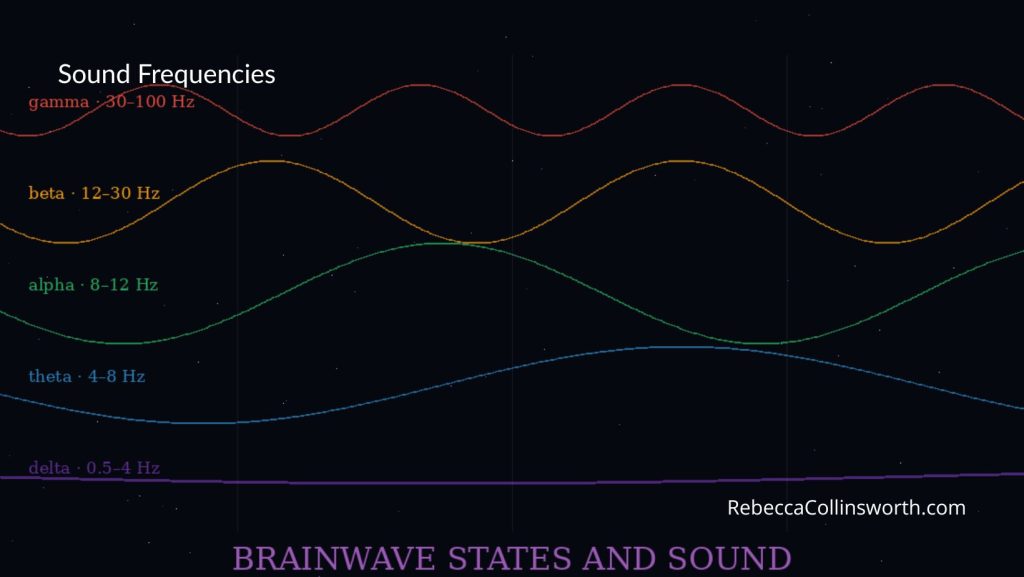
There is something that happens the moment a singing bowl is struck and its tone begins to unfurl through the air around you. Something in your nervous system recognizes it, softens toward it, and opens. That response is not imagination. It is biology meeting ancient wisdom, and the research is beginning to show us exactly why. Tibetan singing bowls have been used for centuries across Himalayan healing traditions as instruments of meditation, ceremony, and inner alignment, and today they are among the most actively studied tools in the entire field of sound healing. As we explored in Brainwave States and Sound: Your Guide to Delta, Theta, Alpha, Beta, and Gamma, the theta-range beat frequency of a singing bowl produces measurable synchronized brainwave activity in listeners, and that is just the beginning of what the science is revealing.
The Bowls Themselves: A Little History
Tibetan singing bowls are hand-hammered metal instruments, traditionally crafted from an alloy of multiple metals and designed to produce a rich, sustaining tone when struck with a mallet or when the mallet is drawn slowly around the bowl’s rim in a circular motion. The rim technique produces a continuous, singing tone, which is where the name originates, as well as the beat frequencies that fall so perfectly within the theta brainwave range associated with meditative states.
The precise origins of singing bowl use in Himalayan spiritual practice are layered in tradition and not always easy to trace through written historical records. What is clear is that bowls and their resonant tones have been central to Buddhist meditation practice, ceremonial use, and healing traditions across Tibet, Nepal, Bhutan, and surrounding regions for many centuries. Shamanic practitioners in these traditions understood something about the specific quality of sound that a singing bowl produces, that quality of sustained, harmonically rich vibration that seems to carry the listener inward rather than outward, which modern neuroscience is now beginning to confirm and illuminate.
Today singing bowls are crafted in both traditional hand-hammered styles and in crystal, with crystal bowls offering a purer, more sustained single-frequency tone and metal bowls offering the complex harmonic richness of multiple simultaneous overtones. Both are used in contemporary sound healing practice, and both have been included in research settings. The choice between them is ultimately a personal one, guided by your own response to each tone’s particular quality.
What the Research Is Revealing
The scientific study of singing bowl therapy has expanded meaningfully over the past decade, and the findings are consistently supportive of what practitioners and participants have been experiencing for centuries.
A landmark observational study from the University of California San Diego, first referenced in our series anchor post A Comprehensive Guide to Sound Frequencies for Mind, Body, Spirit, and Soul, examined sixty-two participants across a Tibetan singing bowl meditation session and found significant improvements in mood, tension, anger, fatigue, and depressed mood alongside meaningful increases in spiritual wellbeing. Participants who were completely new to this form of meditation showed the greatest improvements in tension of anyone in the study, suggesting that you do not need years of practice or prior experience for a singing bowl session to offer something genuinely valuable. (1)
A randomized controlled trial published in 2023 compared the acute relaxation response of Tibetan singing bowl sound treatment against progressive muscle relaxation and a control group in fifty adults with high state anxiety. The singing bowl group showed significant improvements in heart rate variability, specifically increased parasympathetic nervous system activity, alongside measurable changes in brainwave patterns across the session. Importantly, these results were measured not just through self-report but through objective physiological markers including EEG and heart rate variability recordings, adding a meaningful layer of clinical credibility to what participants were experiencing subjectively. (2)
A comprehensive systematic review published in Healthcare in 2025, synthesizing the available quantitative research on Tibetan singing bowl interventions across adult populations including general adults, people experiencing emotional distress, and individuals with cancer or chronic illness, found that most studies reported meaningful improvements in wellbeing and quality of life measures, increases in heart rate variability, and in several studies, increased delta and theta brainwave activity. The review concluded that Tibetan singing bowl interventions offer a non-invasive, low-risk, and widely accepted complementary approach suitable for both clinical and community settings. (3)
Taken together, these studies paint a picture that practicing sound healers and participants around the world have long felt to be true. Something real and measurable is happening in the body during a singing bowl session, and that something appears to be oriented beautifully toward restoration, ease, and inner alignment.
The Sound Itself: Why It Works
Part of what makes singing bowls so particularly effective as a sound healing instrument is the acoustic complexity of their tone. Unlike a pure sine wave, which carries a single frequency, a metal singing bowl produces a rich spectrum of overtones, multiple frequencies that vibrate simultaneously and interact with one another to create the characteristic shimmering, layered quality of its sound.
This harmonic complexity means that a single bowl can simultaneously engage multiple brainwave frequencies, multiple resonance points in the body, and multiple levels of the listening experience at once. The fundamental tone carries the primary frequency, while the overtones create a sonic environment that is far richer and more biologically active than a single note alone.
As we explored in The Science of Sound as Medicine, sound vibration engages the body through hemodynamic, neurological, and musculoskeletal pathways simultaneously. The complex harmonic environment of a singing bowl creates an opportunity for all three of those pathways to be engaged at once, which may help explain why the experience of sitting in the field of a singing bowl so often feels as though it reaches parts of you that other practices do not quite access.
How to Experience Singing Bowl Therapy
Whether you are drawn to singing bowls for their meditative depth, their physiological effects, their spiritual resonance, or simply their extraordinary beauty as sound, there are several wonderful ways to bring this practice into your life.
Attend a sound bath. Sound bath sessions, offered at yoga studios, wellness centers, meditation spaces, and holistic health practices, are typically group experiences in which you lie comfortably while a practitioner plays one or more singing bowls, gongs, and other instruments around and above you. The experience is immersive, deeply relaxing, and requires absolutely nothing from you except the willingness to receive. This is one of the most accessible and immediately rewarding introductions to singing bowl therapy available.
Work with a practitioner one-on-one. Individual singing bowl sessions allow a practitioner to work more specifically with your body, placing bowls directly on or near different areas and adjusting the tones, rhythms, and placements in response to your individual needs and responses. This more intimate format can offer a deeper and more personalized experience than a group sound bath.
Bring a bowl into your own home practice. Personal singing bowls are widely available at a range of price points, and learning to play your own bowl is a genuinely rewarding practice. Even a few minutes of mindful playing at the beginning or end of your day creates a sonic anchor for your practice, a sound that your nervous system begins to associate with the invitation to settle and arrive.
Listen with intention through recordings. High quality singing bowl recordings are abundantly available through streaming platforms, and listening with headphones in a comfortable, quiet space offers a genuine and accessible experience of the bowl’s meditative qualities. This is a beautiful option for those who cannot yet access in-person sessions or who want to explore the experience before investing in their own bowl.
Combine bowls with your bodywork practice. Playing a singing bowl recording during a massage session, a self-massage practice, or any other form of bodywork creates a layered sensory environment that many clients and practitioners describe as deepening the quality of ease and presence in the body. We explore this combination more fully in Sound Healing and Bodywork: Where Massage Therapy Meets Frequency, coming later in this series.
Choosing Your Bowl
If you feel called to bring a singing bowl into your personal practice, here are a few gentle guidelines for finding one that resonates with you.
Let your ears and your body guide you. When possible, experience the bowl in person before purchasing it. Strike it gently, draw the mallet around the rim, and notice what the sound does in your body. Your nervous system is an extraordinarily accurate guide. The bowl that is right for you is the one whose tone invites you somewhere you want to go.
Consider your intention. If you are drawn to deep meditation and theta-state support, look for bowls with a rich, sustained tone in the lower registers. If you are drawn to clarity and focused presence, a higher, cleaner tone may serve you better. Crystal bowls tend toward clarity and purity of tone, while traditional metal bowls offer warmth, complexity, and harmonic richness.
Start with one. A single well-chosen bowl, played with intention and attention, is more valuable than a collection played without presence. Let your practice grow organically from that first resonant relationship.
Your Invitation
The singing bowl has been a companion to human consciousness for centuries, and the research that is gathering around it is confirming something that practitioners and participants have always sensed: that its sound does something real, something kind, and something that the body recognizes as belonging to its own nature.
You deserve to experience that for yourself. Whether through a sound bath, a personal practice, or simply an evening with headphones and a beautifully recorded bowl, we warmly invite you to let that sound find you where you are.
Share what you discover in the comments below or send a message. And stay with us as we explore the frequency of our living planet in The Schumann Resonance: Living in Tune with the Earth, coming next in this series.
References
- Goldsby TL, Goldsby ME, McWalters M, Mills PJ. Effects of singing bowl sound meditation on mood, tension, and well-being: an observational study. J Evid Based Complementary Altern Med. 2017;22(3):401-406. PMID: 27694559. First referenced in A Comprehensive Guide to Sound Frequencies for Mind, Body, Spirit, and Soul.
- Buso S, Marchetti D, Musella G, et al. Acute relaxation response induced by Tibetan singing bowl sounds: a randomized controlled trial. Int J Environ Res Public Health. 2023;20(4):3516. PMID: 36826208.
- Lin FW, Yang YH, Wang JY. Effects of Tibetan singing bowl intervention on psychological and physiological health in adults: a systematic review. Healthcare. 2025;13(16):2002. PMID: 40868617.